
What is Sociology? Definitions, Famous Books & Core Concepts for CDPO/EO Exams
Complete Sociology study notes for APPSC/TGPSC CDPO & EO exams. Learn definitions by Auguste Comte, Weber, and Durkheim in English & Telugu with exam-specific MCQs.
Introduction / పరిచయం
Welcome Aspirants! For competitive exams like CDPO and Extension Officer (EO), understanding the foundation of Sociology is crucial. This subject carries significant weightage in Paper-II. Let’s break down the origin, scope, and key definitions of Sociology.
మిత్రులారా! CDPO మరియు EO పరీక్షలలో సోషియాలజీ (సమాజశాస్త్రం) పేపర్-2 లో అత్యంత కీలకమైన భాగం. ఈ రోజు మనం సోషియాలజీ ఆవిర్భావం, దాని నిర్వచనాలు మరియు ముఖ్యమైన పుస్తకాల గురించి క్షుణ్ణంగా తెలుసుకుందాం.
Origin & Meaning of Sociology / సోషియాలజీ – ఆవిర్భావం మరియు అర్థం
- The word Sociology was coined by the French philosopher Auguste Comte in 1838. He is known as the Father of Sociology.
The word is derived from two terms:
- 1. Socious (Latin word meaning ‘Companion’ or ‘Society’)
- 2. Logos (Greek word meaning ‘Study’ or ‘Science’) Therefore, etymologically, Sociology means the Science of Society.
‘సోషియాలజీ’ (Sociology) అనే పదాన్ని 1838లో ఫ్రెంచ్ తత్వవేత్త ఆగస్ట్ కామ్టే (Auguste Comte) మొదటిసారిగా ఉపయోగించారు. అందుకే ఆయన్ను ‘సమాజశాస్త్ర పితామహుడు’ అని పిలుస్తారు.
- ఈ పదం రెండు విభిన్న భాషా పదాల నుండి పుట్టింది:
- 1. సోసియస్ (Socious): లాటిన్ పదం (అర్థం: భాగస్వామి లేదా సమాజం)
- 2. లోగోస్ (Logos): గ్రీకు పదం (అర్థం: శాస్త్రం లేదా అధ్యయనం) మొత్తంగా చూస్తే, సోషియాలజీ అంటే “సమాజం గురించి అధ్యయనం చేసే శాస్త్రం”.
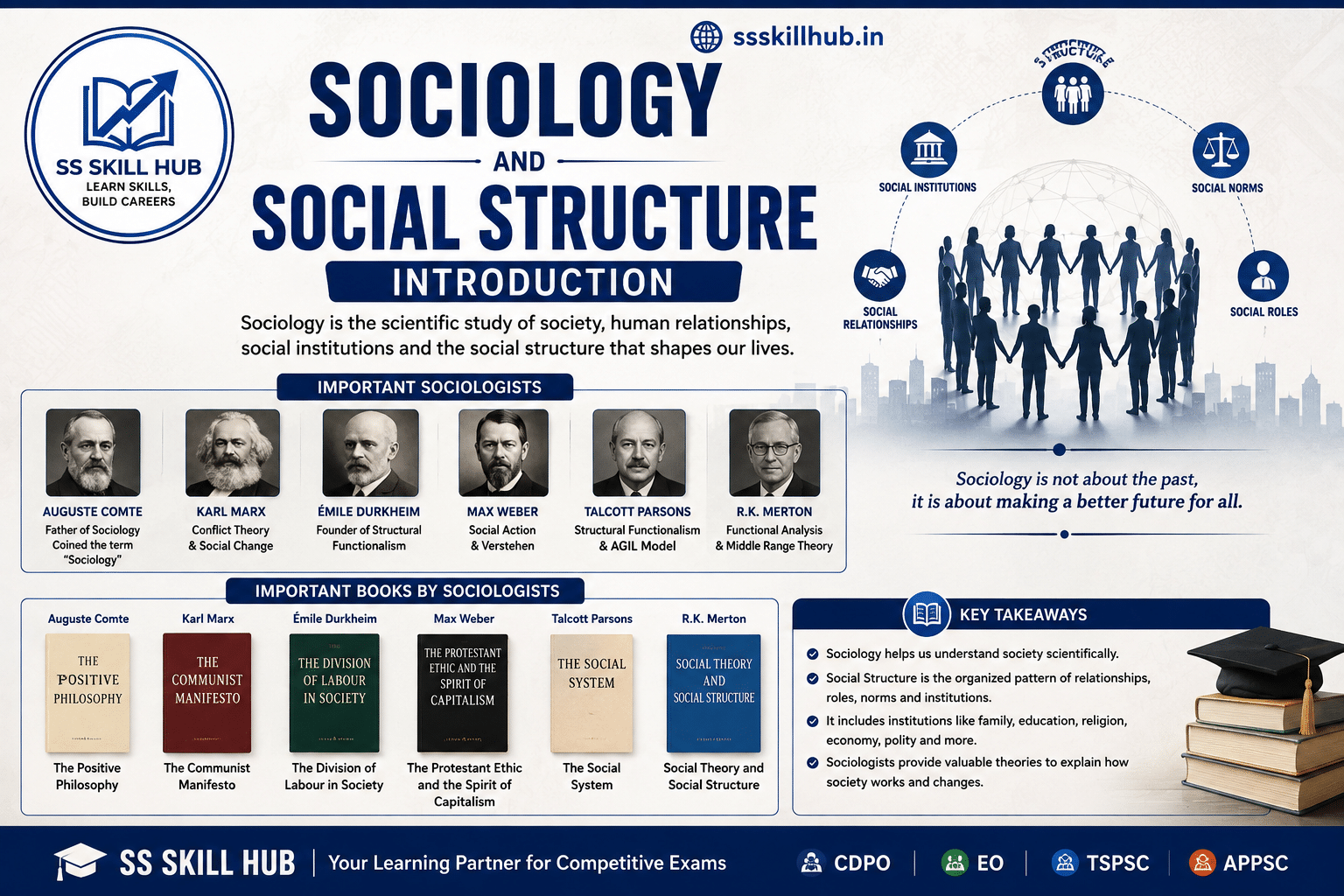
Key Definitions by Sociologists / ప్రముఖ సమాజశాస్త్రవేత్తల నిర్వచనాలు
- In exam points of view, matching the definition to the sociologist is a frequently asked question type. Memorize these key definitions:
Sociologist (శాస్త్రవేత్త) Definition (English) నిర్వచనం (తెలుగు) Auguste Comte Sociology is the science of social phenomena, subject to natural and invariable laws. సమాజశాస్త్రం అనేది సహజ మరియు స్థిరమైన నియమాలకు లోబడి ఉండే సామాజిక దృగ్విషయాల శాస్త్రం. Max Weber Sociology is the science which attempts the interpretative understanding of social action. సామాజిక చర్యను (Social Action) విశ్లేషణాత్మకంగా అర్థం చేసుకునే శాస్త్రమే సమాజశాస్త్రం. Emile Durkheim Sociology is the science of social facts and institutions. సామాజిక విషయాలు (Social Facts) మరియు సామాజిక సంస్థల అధ్యయనమే సమాజశాస్త్రం. MacIver and Page Sociology is “about social relationships, the network of relationships we call society.” సమాజశాస్త్రం సామాజిక సంబంధాల గురించి తెలుపుతుంది. ఈ సంబంధాల వలయాన్నే మనం ‘సమాజం’ అంటాము. Ward & Sumner Sociology is the science of society. సమాజశాస్త్రం అంటే సమాజం గురించిన శాస్త్రం. Famous Books & Authors / ప్రముఖ పుస్తకాలు – రచయితలు
By Auguste Comte
| 1. The Course of Positive Philosophy (1830–1842) – Introduced positivism and sociology as science. | 1. ది కోర్స్ ఆఫ్ పాజిటివ్ ఫిలాసఫీ (1830–1842) – పాజిటివిజం మరియు సమాజశాస్త్రాన్ని ఒక విజ్ఞానశాస్త్రంగా పరిచయం చేసింది. |
| 2. A General View of Positivism (1848) – Explained positivism and society. | 2. ఎ జనరల్ వ్యూ ఆఫ్ పాజిటివిజం (1848) – పాజిటివిజం మరియు సమాజాన్ని వివరించింది. |
| 3. System of Positive Polity (1851–1854) – Social organization and moral order. | 3. సిస్టమ్ ఆఫ్ పాజిటివ్ పాలిటీ (1851–1854) – సామాజిక వ్యవస్థ మరియు నైతిక క్రమం. |
| 4. Religion of Humanity – Moral society based on humanity. | 4. రిలిజియన్ ఆఫ్ హ్యుమానిటీ – మానవత్వంపై ఆధారపడిన నైతిక సమాజం. |
| Other Books & Others | ఇతర పుస్తకాలు & ఇతరులు |
| “Le Suicide” (Suicide) & “The Rules of Sociological Method” – Emile Durkheim | “Le Suicide” (ఆత్మహత్య) & “The Rules of Sociological Method” – ఎమిలే డర్కీమ్ |
| “The Protestant Ethic and the Spirit of Capitalism” – Max Weber | “The Protestant Ethic and the Spirit of Capitalism” – మాక్స్ వెబర్ |
| “Society: An Introductory Analysis” – MacIver and Page | “Society: An Introductory Analysis” – మాక్ఐవర్ మరియు పేజ్ |
Please Watch Below Youtube video for clear explanation about Sociology and Social Structure Introduction and please subscribe to SS Skill Hub youtube channel for further topics.
MCQ’S
Sociology Introduction MCQ’s(సామాజిక శాస్త్రం )
1. Who first used the term “Sociology”? (Sociology అనే పదాన్ని మొదట ఉపయోగించినవారు ఎవరు?)
A) Karl Marx(కార్ల్ మార్క్స్)
B) Auguste Comte(అగస్టే కామ్టే)
C) Max Weber(మాక్స్ వెబర్)
D) Émile Durkheim(ఎమిలే డర్కీమ్)
Show Answer
✅ B) Auguste Comte(అగస్టే కామ్టే)
Explanation:
Auguste Comte introduced Sociology in 1838 and is known as the Father of Sociology.
2. The word Sociology is derived from: ( Sociology అనే పదం ఏ రెండు పదాల నుండి వచ్చింది?)
A) Greek + French
B) Latin + English
C) Latin + Greek
D) French + German
Show Answer
✅ C) Latin + Greek
3. What is the meaning of the word “Socius”? ( “Socius” అనే పదానికి అర్థం ఏమిటి?)
A) Study (అధ్యయనం)
B) Society / Companion(సమాజం / సహచరుడు)
C) Science(విజ్ఞానం)
D) Culture(శాస్త్రం)
Show Answer
✅ B) Society / Companion(సమాజం / సహచరుడు)
4. What is the meaning of the word “Logos”? (“Logos” అనే పదానికి అర్థం ఏమిటి?)
A) Society (సమాజం)
B) Family (కుటుంబం)
C) Study / Science (అధ్యయనం / శాస్త్రం)
D) Institution (సంస్కృతి)
Show Answer
✅ C) Study / Science (అధ్యయనం / శాస్త్రం)
5. Who is known as the Father of Sociology? (సామాజిక శాస్త్ర పితామహుడు ఎవరు?)
A) Max Weber (మాక్స్ వెబర్)
B) Karl Marx (కార్ల్ మార్క్స్)
C) Auguste Comte (అగస్టే కామ్టే)
D) Herbert Spencer(హెర్బర్ట్ స్పెన్సర్)
Show Answer
✅ C) Auguste Comte (అగస్టే కామ్టే)
6. Who said, “Sociology is the study of social facts”? ( “Sociology is the study of social facts” అని చెప్పినవారు ఎవరు?)
A) Émile Durkheim (ఎమిలే డర్కీమ్)
B) Max Weber (మాక్స్ వెబర్)
C) MacIver and Page (మాక్ఐవర్ మరియు పేజ్)
D) Kingsley Davis (కింగ్స్లీ డేవిస్)
Show Answer
✅ A) Émile Durkheim (ఎమిలే డర్కీమ్)
7. Who defined sociology as “the study of social relationships”? (7. “Sociology is the study of social relationships” అని నిర్వచించినవారు ఎవరు?)
A) Gillin and Gillin (గిల్లిన్ మరియు గిల్లిన్)
B) MacIver and Page (మాక్ఐవర్ మరియు పేజ్))
C) Harry M. Johnson (హ్యారీ M. జాన్సన్)
D) Karl Mannheim (కార్ల్ మ్యాన్హీమ్)
Show Answer
✅ B) MacIver and Page (మాక్ఐవర్ మరియు పేజ్)
← Previous: Home
SS Skill Hub
Sociology for CDPO & EO
Master the fundamentals of Social Structures with our expert-led classes. Click below to access full video lectures, comprehensive notes, and daily practice tests designed specifically for state-level competitive exams.
1 thought on “1.1 – Sociology Introduction”