
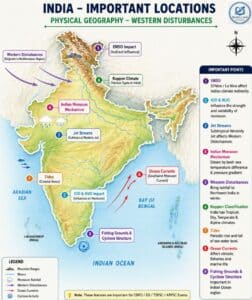
Western Disturbances Structure:
- ENSO (El Nino/La Nina/Walker Circulation) — Q1–Q5
- IOD & MJO — Q6–Q9
- Jet Streams — Q10–Q12
- Indian Monsoon Mechanism — Q13–Q17
- Western Disturbances — Q18–Q20
- Koppen Classification — Q21–Q26
- Tides — Q27–Q31
- Ocean Currents — Q32–Q37
- Fishing Grounds & Cyclone Structure — Q38–Q39
Physical Geography — MCQ Practice
భౌతిక భూగోళశాస్త్రం — బహుళైచ్ఛిక ప్రశ్నలు (అభ్యాసం)
Western Disturbances • ENSO • IOD • MJO • Jet Streams • Monsoon • Köppen • Tides • Ocean Currents
Topics Covered కవర్ చేసిన అంశాలు
- El Nino, La Nina & Walker Circulation (ENSO) ఎల్ నీనో, లా నీనా & వాకర్ సర్క్యులేషన్
- Indian Ocean Dipole (IOD) & Madden–Julian Oscillation (MJO) ఇండియన్ ఓషన్ డైపోల్ & మాడెన్-జూలియన్ ఆసిలేషన్
- Jet Streams (Polar, Subtropical, Tropical Easterly) జెట్ స్ట్రీమ్లు (ధ్రువ, ఉపఉష్ణమండల, ఉష్ణమండల తూర్పు జెట్)
- Mechanism of Indian Monsoon భారత రుతుపవనాల విధానం
- Western Disturbances & Mahawat పశ్చిమ అవాంతరాలు (వెస్టర్న్ డిస్టర్బెన్సెస్) & మహావత్
- Köppen Climate Classification కొప్పెన్ వాతావరణ వర్గీకరణ
- Tides — Spring, Neap, Diurnal, Semi-diurnal అలలు — స్ప్రింగ్, నీప్, డైయూర్నల్, సెమీ-డైయూర్నల్
- Ocean Currents — Atlantic, Pacific, Indian Ocean సముద్ర ప్రవాహాలు — అట్లాంటిక్, పసిఫిక్, హిందూ మహాసముద్రం
- Fishing Grounds & Continental Shelf మత్స్య క్షేత్రాలు & కాంటినెంటల్ షెల్ఫ్
1. El Niño, La Niña & Walker Circulation
ఎల్ నీనో, లా నీనా & వాకర్ సర్క్యులేషన్Q1 – Q5
Q1
What triggers the formation of El Niño conditions in the Pacific?
పసిఫిక్ మహాసముద్రంలో ఎల్ నీనో పరిస్థితులు ఏర్పడటానికి కారణం ఏమిటి?
- A) Strengthening of trade winds వాణిజ్య పవనాలు బలపడటం
- B) Weakening of trade winds causing warm water to accumulate in the eastern Pacific వాణిజ్య పవనాలు బలహీనపడి వెచ్చని నీరు తూర్పు పసిఫిక్లో పేరుకుపోవడం
- C) Intensification of the Walker cell వాకర్ సెల్ మరింత బలపడటం
- D) Upwelling of cold water off Peru పెరూ తీరంలో చల్లని నీటి అప్వెల్లింగ్
✔ Correct Answer: B
Explanation
When trade winds weaken, warm water that is normally pushed and piled up in the western Pacific flows back and accumulates near the Peruvian coast, creating a low-pressure zone there, reversing the normal Walker Circulation. This reversal is the El Niño condition.
వాణిజ్య పవనాలు బలహీనపడినప్పుడు, సాధారణంగా పశ్చిమ పసిఫిక్లో పేరుకుపోయే వెచ్చని నీరు వెనక్కి ప్రవహించి పెరూ తీరం వద్ద పేరుకుపోతుంది, అక్కడ అల్పపీడన ప్రాంతం ఏర్పడి సాధారణ వాకర్ సర్క్యులేషన్ తలకిందులవుతుంది. ఈ తలకిందుల స్థితినే ఎల్ నీనో అంటారు.
Q2
El Nino is best described as:
ఎల్ నీనోను ఏవిధంగా వర్ణించవచ్చు?
- A) Intensification of the Walker cell వాకర్ సెల్ తీవ్రతరం కావడం
- B) Reversal of the Walker cell వాకర్ సెల్ తలకిందులవడం
- C) A permanent feature of the Pacific unrelated to pressure పీడనంతో సంబంధం లేని పసిఫిక్ శాశ్వత లక్షణం
- D) A phenomenon confined only to the Indian Ocean కేవలం హిందూ మహాసముద్రానికి పరిమితమైన దృగ్విషయం
✔ Correct Answer: B
Explanation
La Nina represents an intensification of the normal Walker cell, while El Niño represents its reversal. Remember: "La Niña — intensification; El Niño — reversal."
లా నీనా అనేది సాధారణ వాకర్ సెల్ మరింత బలపడటాన్ని సూచిస్తే, ఎల్ నీనో దాని తలకిందులవడాన్ని సూచిస్తుంది. గుర్తుంచుకోండి: "లా నీనా — తీవ్రతరం; ఎల్ నీనో — తలకిందులు."
Q3
During El Nino years, Australia typically experiences:
ఎల్ నీనో సంవత్సరాల్లో ఆస్ట్రేలియా సాధారణంగా దేనిని ఎదుర్కొంటుంది?
- A) Severe floods తీవ్రమైన వరదలు
- B) Drought and bush/forest fires కరువు మరియు అడవి మంటలు
- C) No change in rainfall pattern వర్షపాతంలో ఎలాంటి మార్పు లేకపోవడం
- D) Increased cyclone landfalls only కేవలం అధిక తుఫాను తాకిడులు మాత్రమే
✔ Correct Answer: B
Explanation
Because warm water shifts eastward towards South America during El Niño, the western Pacific (including Australia) becomes drier, leading to droughts and bushfires. During La Niña, the opposite occurs and Australia experiences floods.
ఎల్ నీనో సమయంలో వెచ్చని నీరు దక్షిణ అమెరికా వైపు తూర్పుకు జరగడం వల్ల, పశ్చిమ పసిఫిక్ (ఆస్ట్రేలియాతో సహా) పొడిగా మారి కరువులు, అడవి మంటలకు దారితీస్తుంది. లా నీనా సమయంలో దీనికి వ్యతిరేకం జరిగి ఆస్ట్రేలియాలో వరదలు వస్తాయి.
Q4
(PYQ) With reference to the Indian monsoon, consider: (1) El Niño has an adverse effect on the southwest monsoon of India (2) La Niña has no effect on the monsoon climate. Which statement(s) is/are correct?
(పాత ప్రశ్న) భారత రుతుపవనాల విషయంలో పరిగణించండి: (1) ఎల్ నీనో భారత నైరుతి రుతుపవనాలపై ప్రతికూల ప్రభావం చూపుతుంది (2) లా నీనాకు రుతుపవన వాతావరణంపై ఎలాంటి ప్రభావం ఉండదు. ఏ ప్రకటన(లు) సరైనవి?
- A) 1 only 1 మాత్రమే
- B) 2 only 2 మాత్రమే
- C) Both 1 and 2 1 మరియు 2 రెండూ
- D) Neither 1 nor 2 1 మరియు 2 రెండూ కాదు
✔ Correct Answer: D
Explanation
Statement 1 is factually true (El Niño does hurt the monsoon), but as a definition statement it is checked against La Niña — La Niña is characterized by unusually cold ocean temperatures in the equatorial Pacific (not Indian) Ocean, so any framing tying it there is wrong; and La Niña is actually beneficial (not "no effect") for Indian rainfall. Hence both statements as posed are incorrect.
లా నీనా అనేది భూమధ్యరేఖ పసిఫిక్ మహాసముద్రంలో (హిందూ మహాసముద్రంలో కాదు) అసాధారణంగా చల్లని నీటి ఉష్ణోగ్రతలతో కూడినది; అలాగే లా నీనా భారత వర్షపాతానికి "ప్రభావం లేదు" కాకుండా వాస్తవానికి ప్రయోజనకరంగా ఉంటుంది. కాబట్టి ఇచ్చిన రెండు ప్రకటనలు తప్పు.
Q5
The subtropical high-pressure belt that sustains the trade winds is best described as:
వాణిజ్య పవనాలను కొనసాగించే ఉపఉష్ణమండల అధిక పీడన మేఖలను ఎలా వర్ణించవచ్చు?
- A) A thermal (heat-induced) low ఉష్ణ ప్రేరిత అల్పపీడనం
- B) A dynamic high, created by sinking air అధోగమన గాలి వల్ల ఏర్పడే డైనమిక్ అధిక పీడనం
- C) A permanent feature unaffected by ocean heating సముద్ర వేడెక్కడం ప్రభావితం కాని శాశ్వత లక్షణం
- D) Found only in the northern hemisphere కేవలం ఉత్తర అర్ధగోళంలో మాత్రమే ఉంటుంది
✔ Correct Answer: B
Explanation
The subtropical high is a dynamic high pressure created by sinking air. When the ocean heats up and air tends to rise instead of sink, this high-pressure system gets diluted, weakening or temporarily disrupting the trade winds that depend on it.
ఉపఉష్ణమండల అధిక పీడనం అధోగమన గాలి వల్ల ఏర్పడే డైనమిక్ అధిక పీడనం. సముద్రం వేడెక్కినప్పుడు గాలి అధోగమనానికి బదులు పైకి లేవడానికి ప్రయత్నించడం వల్ల ఈ అధిక పీడన వ్యవస్థ బలహీనపడి, దానిపై ఆధారపడిన వాణిజ్య పవనాలు బలహీనమవుతాయి లేదా తాత్కాలికంగా అంతరాయం కలుగుతుంది.
2. Indian Ocean Dipole (IOD) & Madden-Julian Oscillation (MJO)
ఇండియన్ ఓషన్ డైపోల్ & మాడెన్-జూలియన్ ఆసిలేషన్Q6 – Q9
Q6
A positive Indian Ocean Dipole (IOD) is characterized by:
సానుకూల (పాజిటివ్) ఇండియన్ ఓషన్ డైపోల్ (IOD) యొక్క లక్షణం ఏమిటి?
- A) Warmer waters in the western Indian Ocean (Somali coast), good for Indian monsoon పశ్చిమ హిందూ మహాసముద్రంలో (సోమాలియా తీరం) వెచ్చని నీరు, భారత రుతుపవనాలకు మేలు చేస్తుంది
- B) Warmer waters in the eastern Indian Ocean (Indonesian coast) only తూర్పు హిందూ మహాసముద్రంలో (ఇండోనేషియా తీరం) మాత్రమే వెచ్చని నీరు
- C) Equal temperatures on both coasts రెండు తీరాలలో సమాన ఉష్ణోగ్రతలు
- D) Cold water upwelling near Indonesia dominating the entire basin మొత్తం బేసిన్ను ఆధిపత్యం చేసే ఇండోనేషియా వద్ద చల్లని నీటి అప్వెల్లింగ్
✔ Correct Answer: A
Explanation
IOD is the temperature difference between the western Indian Ocean (Somali coast) and the eastern Indian Ocean (Indonesian coast). In the positive phase, the western part is slightly warmer, which is favorable for the Indian monsoon. The negative phase reverses this and is unfavorable.
IOD అనేది పశ్చిమ హిందూ మహాసముద్రం (సోమాలియా తీరం) మరియు తూర్పు హిందూ మహాసముద్రం (ఇండోనేషియా తీరం) మధ్య ఉష్ణోగ్రత వ్యత్యాసం. సానుకూల దశలో పశ్చిమ భాగం కొంచెం వెచ్చగా ఉంటుంది, ఇది భారత రుతుపవనాలకు అనుకూలం. ప్రతికూల దశలో ఇది తలకిందులవుతుంది, ఇది అననుకూలం.
Q7
Which phase of the IOD can counteract or dilute the drought-inducing effect of El Niño on the Indian monsoon?
భారత రుతుపవనాలపై ఎల్ నీనో కరువు ప్రభావాన్ని తగ్గించగల IOD దశ ఏది?
- A) Neutral phase తటస్థ దశ
- B) Positive phase సానుకూల దశ
- C) Negative phase ప్రతికూల దశ
- D) IOD cannot counteract El Niño at all IOD ఎల్ నీనోను ఎప్పుడూ తగ్గించలేదు
✔ Correct Answer: B
Explanation
A positive IOD (warmer Somali coast/western Indian Ocean) is favorable for monsoon rains and can dilute or offset an unfavorable El Niño effect on the Indian monsoon.
సానుకూల IOD (వెచ్చని సోమాలియా తీరం/పశ్చిమ హిందూ మహాసముద్రం) రుతుపవన వర్షాలకు అనుకూలంగా ఉండి, భారత రుతుపవనాలపై అననుకూలమైన ఎల్ నీనో ప్రభావాన్ని తగ్గించగలదు లేదా భర్తీ చేయగలదు.
Q8
The Madden-Julian Oscillation (MJO) is a moving system of high and low pressure that typically completes one full cycle around the globe in:
మాడెన్-జూలియన్ ఆసిలేషన్ (MJO) అనేది కదిలే అధిక మరియు అల్ప పీడన వ్యవస్థ, ఇది భూమి చుట్టూ ఒక పూర్తి చక్రాన్ని ఎంత సమయంలో పూర్తి చేస్తుంది?
- A) 7 to 10 days 7 నుండి 10 రోజులు
- B) 14 to 21 days 14 నుండి 21 రోజులు
- C) 45 to 60 days 45 నుండి 60 రోజులు
- D) 6 to 8 months 6 నుండి 8 నెలలు
✔ Correct Answer: C
Explanation
MJO moves from west to east across the tropics (between the Tropic of Cancer and Tropic of Capricorn) and completes a full cycle in about 45–60 days. It has an enhanced-rainfall phase (low pressure, rising air) and a suppressed-rainfall phase (high pressure, sinking air). If the low-pressure phase passes over India more frequently during the monsoon, it boosts monsoonal rainfall.
MJO ఉష్ణమండలంలో (కర్కాటక రేఖ మరియు మకర రేఖ మధ్య) పశ్చిమం నుండి తూర్పుకు కదులుతూ 45–60 రోజుల్లో పూర్తి చక్రాన్ని పూర్తి చేస్తుంది. దీనికి మెరుగైన వర్షపాత దశ (అల్పపీడనం, పైకి లేచే గాలి) మరియు అణచివేయబడిన వర్షపాత దశ (అధిక పీడనం, అధోగమన గాలి) ఉంటాయి. రుతుపవనాల సమయంలో అల్పపీడన దశ భారతదేశంపై తరచుగా వస్తే రుతుపవన వర్షపాతం పెరుగుతుంది.
Q9
(PYQ-style) Consider the following statements about El Niño's effect on Indian monsoon: (1) It occurs in the South Pacific and hence has no impact on the monsoon (2) It leads to increased rainfall over India during monsoon (3) Its impact can be neutralized by the Indian Ocean Dipole and Madden-Julian Oscillation. Which is/are correct?
(పాత ప్రశ్న తరహా) భారత రుతుపవనాలపై ఎల్ నీనో ప్రభావం గురించి పరిగణించండి: (1) ఇది దక్షిణ పసిఫిక్లో సంభవిస్తుంది కాబట్టి రుతుపవనాలపై ఎలాంటి ప్రభావం ఉండదు (2) ఇది రుతుపవనాల సమయంలో భారతదేశంలో వర్షపాతం పెరగడానికి దారితీస్తుంది (3) దీని ప్రభావాన్ని ఇండియన్ ఓషన్ డైపోల్ మరియు మాడెన్-జూలియన్ ఆసిలేషన్ తటస్థీకరించగలవు. ఏది/ఏవి సరైనవి?
- A) 1 only 1 మాత్రమే
- B) 1 and 2 only 1 మరియు 2 మాత్రమే
- C) 3 only 3 మాత్రమే
- D) 1, 2 and 3 1, 2 మరియు 3
✔ Correct Answer: C
Explanation
El Niño occurs in the Pacific but still strongly affects Indian monsoon via the reversed Walker circulation (so statement 1 is wrong). El Niño generally causes reduced, not increased, rainfall in India (statement 2 is wrong). Only statement 3 is correct — IOD and MJO can dilute El Niño's impact.
ఎల్ నీనో పసిఫిక్లో సంభవించినా తలకిందులైన వాకర్ సర్క్యులేషన్ ద్వారా భారత రుతుపవనాలపై బలంగా ప్రభావం చూపుతుంది (కాబట్టి ప్రకటన 1 తప్పు). ఎల్ నీనో సాధారణంగా భారతదేశంలో వర్షపాతం పెరగడానికి కాదు, తగ్గడానికి కారణమవుతుంది (ప్రకటన 2 తప్పు). ప్రకటన 3 మాత్రమే సరైనది — IOD మరియు MJO ఎల్ నీనో ప్రభావాన్ని తగ్గించగలవు.
3. Jet Streams
జెట్ స్ట్రీమ్లుQ10 – Q12
Q10
Jet streams are also known as geostrophic winds because they:
జెట్ స్ట్రీమ్లను జియోస్ట్రోఫిక్ పవనాలు అని కూడా అంటారు ఎందుకంటే అవి:
- A) Move parallel to the latitudes అక్షాంశాలకు సమాంతరంగా కదులుతాయి
- B) Move perpendicular to the latitudes అక్షాంశాలకు లంబంగా కదులుతాయి
- C) Occur only over the poles కేవలం ధ్రువాల మీద మాత్రమే ఏర్పడతాయి
- D) Are unaffected by the Coriolis force కొరియాలిస్ బలం ప్రభావం వాటిపై ఉండదు
✔ Correct Answer: A
Explanation
Geostrophic winds move parallel to latitude lines because the pressure gradient force is balanced by the Coriolis force. Jet streams are high-altitude wind systems moving at 250–350 km/hr, typically near the tropopause but can dip to 6-7 km.
జియోస్ట్రోఫిక్ పవనాలు అక్షాంశ రేఖలకు సమాంతరంగా కదులుతాయి, ఎందుకంటే పీడన ప్రవణత బలం కొరియాలిస్ బలంతో సమతుల్యమవుతుంది. జెట్ స్ట్రీమ్లు 250–350 కి.మీ/గం వేగంతో కదిలే ఎత్తైన వాయు వ్యవస్థలు, సాధారణంగా ట్రోపోపాజ్ దగ్గర ఉంటాయి కానీ 6-7 కి.మీ వరకు దిగవచ్చు.
Q11
(PYQ) Consider the following statements: Jet streams occur only in the northern hemisphere. Which is correct?
(పాత ప్రశ్న) పరిగణించండి: జెట్ స్ట్రీమ్లు ఉత్తర అర్ధగోళంలో మాత్రమే ఏర్పడతాయి. ఇది సరైనదా?
- A) Correct — only northern hemisphere సరైనది — ఉత్తర అర్ధగోళంలో మాత్రమే
- B) Incorrect — jet streams occur in both hemispheres తప్పు — జెట్ స్ట్రీమ్లు రెండు అర్ధగోళాల్లోనూ ఏర్పడతాయి
- C) Correct — only southern hemisphere సరైనది — దక్షిణ అర్ధగోళంలో మాత్రమే
- D) Jet streams do not exist జెట్ స్ట్రీమ్లు ఉండవు
✔ Correct Answer: B
Explanation
Each hemisphere has a polar jet stream and a subtropical jet stream — that is, four primary permanent jet streams globally. The polar jet is stronger since the temperature contrast that creates it is more persistent through the year.
ప్రతి అర్ధగోళంలో ఒక ధ్రువ జెట్ స్ట్రీమ్ మరియు ఒక ఉపఉష్ణమండల జెట్ స్ట్రీమ్ ఉంటాయి — అంటే ప్రపంచవ్యాప్తంగా నాలుగు ప్రధాన శాశ్వత జెట్ స్ట్రీమ్లు ఉంటాయి. ధ్రువ జెట్ ఏడాది పొడవునా మరింత స్థిరంగా ఉండే ఉష్ణోగ్రత వ్యత్యాసం వల్ల బలంగా ఉంటుంది.
Q12
The Tropical Easterly Jet, which strengthens the Indian monsoon, is created due to:
భారత రుతుపవనాలను బలపరిచే ఉష్ణమండల తూర్పు జెట్ (ట్రాపికల్ ఈస్టర్లీ జెట్) దేని వల్ల ఏర్పడుతుంది?
- A) Cooling of the Siberian plains సైబీరియా మైదానాల చల్లబడటం
- B) Intense heating of the Tibetan highland టిబెట్ ఎత్తైన ప్రాంతం తీవ్రంగా వేడెక్కడం
- C) Cooling of the Bay of Bengal బంగాళాఖాతం చల్లబడటం
- D) Presence of the subtropical westerly jet ఉపఉష్ణమండల పశ్చిమ జెట్ ఉనికి
✔ Correct Answer: B
Explanation
Tibet, being a high plateau (average altitude ~5 km) that still records warm surface temperatures, creates intense low pressure. Rising air there hits the tropopause and diverges; one branch travels southward via Kolkata's longitude towards Africa, crosses the equator, and sinks near the Mascarene High, driving surface winds that strengthen the monsoon. This upper-level wind is the Tropical Easterly Jet.
టిబెట్ ఎత్తైన పీఠభూమి (సగటు ఎత్తు ~5 కి.మీ) అయినప్పటికీ ఉపరితల ఉష్ణోగ్రతలు వెచ్చగా ఉండటం వల్ల తీవ్రమైన అల్పపీడనం ఏర్పడుతుంది. అక్కడ పైకి లేచే గాలి ట్రోపోపాజ్ను తాకి వేరుపడుతుంది; ఒక శాఖ కోల్కతా రేఖాంశం మీదుగా ఆఫ్రికా వైపు దక్షిణంగా వెళ్లి భూమధ్యరేఖను దాటి మస్కరీన్ హై వద్ద దిగి, ఉపరితల పవనాలను నడిపి రుతుపవనాలను బలపరుస్తుంది. ఈ ఎత్తైన గాలినే ట్రాపికల్ ఈస్టర్లీ జెట్ అంటారు.
4. Mechanism of the Indian Monsoon
భారత రుతుపవనాల విధానంQ13 – Q17
Q13
The onset of the southwest monsoon over India is directly linked with:
భారతదేశంపై నైరుతి రుతుపవనాల ప్రారంభం దేనితో ప్రత్యక్ష సంబంధం కలిగి ఉంటుంది?
- A) Strengthening of the subtropical westerly jet ఉపఉష్ణమండల పశ్చిమ జెట్ బలపడటం
- B) Disappearance/withdrawal of the subtropical westerly jet from over India భారతదేశంపై నుండి ఉపఉష్ణమండల పశ్చిమ జెట్ తొలగిపోవడం
- C) Formation of western disturbances పశ్చిమ అవాంతరాలు ఏర్పడటం
- D) Cooling of the Tibetan Plateau టిబెట్ పీఠభూమి చల్లబడటం
✔ Correct Answer: B
Explanation
As long as the subtropical westerly jet's southern branch persists over India in winter, surface winds cannot shift, and monsoon onset is blocked. Once this jet thins out and disappears (moving north of the Himalayas), surface winds reverse and the monsoon sets in with increased rainfall.
శీతాకాలంలో ఉపఉష్ణమండల పశ్చిమ జెట్ యొక్క దక్షిణ శాఖ భారతదేశంపై కొనసాగినంత కాలం, ఉపరితల గాలులు మారవు, రుతుపవన ప్రారంభం అడ్డుకోబడుతుంది. ఈ జెట్ సన్నబడి అదృశ్యమైనప్పుడు (హిమాలయాలకు ఉత్తరంగా జరిగినప్పుడు), ఉపరితల గాలులు తలకిందులై రుతుపవనాలు ప్రారంభమై వర్షపాతం పెరుగుతుంది.
Q14
The term "monsoon" fundamentally refers to:
"రుతుపవనం" అనే పదం ప్రాథమికంగా దేనిని సూచిస్తుంది?
- A) Any heavy rainfall event ఏదైనా భారీ వర్షపాత సంఘటన
- B) A complete seasonal reversal of wind direction పవన దిశ పూర్తి కాలానుగుణ మార్పు (తలకిందులు)
- C) Winds that blow only over oceans కేవలం మహాసముద్రాల మీదుగా మాత్రమే వీచే గాలులు
- D) A permanent easterly wind belt శాశ్వత తూర్పు పవన మేఖల
✔ Correct Answer: B
Explanation
Monsoon means a complete reversal of the wind system between summer and winter. This was also confirmed as a repeated exam concept — "seasonal reversal of winds" is the characteristic feature of monsoon climate.
రుతుపవనం అంటే వేసవి మరియు శీతాకాలం మధ్య పవన వ్యవస్థ పూర్తిగా తలకిందులవడం. "పవనాల కాలానుగుణ తలకిందులు" అనేది రుతుపవన వాతావరణం యొక్క ప్రధాన లక్షణంగా పరీక్షలలో పునరావృతమయ్యే భావన.
Q15
In India, as one moves from south to north and from east to west (away from moisture source), the amount of monsoon rainfall generally:
భారతదేశంలో దక్షిణం నుండి ఉత్తరానికి మరియు తూర్పు నుండి పడమరకు (తేమ మూలం నుండి దూరంగా) వెళ్తున్నప్పుడు రుతుపవన వర్షపాతం సాధారణంగా ఎలా ఉంటుంది?
- A) Reduces తగ్గుతుంది
- B) Increases పెరుగుతుంది
- C) Remains constant స్థిరంగా ఉంటుంది
- D) Fluctuates randomly with no pattern ఎలాంటి నమూనా లేకుండా యాదృచ్ఛికంగా మారుతుంది
✔ Correct Answer: A
Explanation
Much of India's rainfall is orographic. Areas like the Western Ghats and northeastern hill tracts (e.g., near Mawsynram) get very high rainfall. As one moves north or west away from the moisture source (the seas), rainfall progressively reduces.
భారతదేశంలో ఎక్కువ వర్షపాతం ఒరోగ్రాఫిక్ (పర్వత ప్రేరిత) రకానికి చెందినది. పశ్చిమ కనుమలు మరియు ఈశాన్య కొండ ప్రాంతాలు (మాసిన్రామ్ వంటివి) చాలా అధిక వర్షపాతం పొందుతాయి. తేమ మూలం (సముద్రాలు) నుండి ఉత్తరం లేదా పడమరకు దూరంగా వెళ్తున్నకొద్దీ వర్షపాతం క్రమంగా తగ్గుతుంది.
Q16
The rain-bearing monsoon winds that enter through the Narmada rift valley cause rainfall mainly in:
నర్మదా చీలిక లోయ ద్వారా ప్రవేశించే వర్షాన్నిచ్చే రుతుపవనాలు ప్రధానంగా ఎక్కడ వర్షపాతం కలిగిస్తాయి?
- A) The Himalayan foothills only కేవలం హిమాలయ పాదపర్వతాలలో మాత్రమే
- B) Central India మధ్య భారతదేశం
- C) The Thar Desert థార్ ఎడారి
- D) Coastal Tamil Nadu తీర తమిళనాడు
✔ Correct Answer: B
Explanation
After the monsoon winds strike the Kerala coast and progress along the west coast, one branch also enters between the Narmada rift valley and causes rainfall across central India as it moves further inland.
రుతుపవన గాలులు కేరళ తీరాన్ని తాకి పశ్చిమ తీరం వెంబడి ముందుకు సాగిన తర్వాత, ఒక శాఖ నర్మదా చీలిక లోయ మధ్య ప్రవేశించి, లోతట్టు ప్రాంతాలకు కదులుతున్నప్పుడు మధ్య భారతదేశంలో వర్షపాతం కలిగిస్తుంది.
Q17
Rainfall due to heating of land creating a low-pressure zone, causing the ITCZ to shift and pull in winds from the southern high-pressure zone (blowing southwest to northeast) — this describes:
భూమి వేడెక్కడం వల్ల ఏర్పడిన అల్పపీడన ప్రాంతం, ITCZ మారడానికి కారణమై దక్షిణ అధిక పీడన ప్రాంతం నుండి గాలులను (నైరుతి నుండి ఈశాన్యానికి వీచేవి) లాగడం — దీనిని ఏమని పిలుస్తారు?
- A) Southwest monsoon mechanism నైరుతి రుతుపవన విధానం
- B) Western disturbance mechanism పశ్చిమ అవాంతర విధానం
- C) Tropical easterly jet mechanism ట్రాపికల్ ఈస్టర్లీ జెట్ విధానం
- D) Retreating monsoon mechanism తిరోగమన రుతుపవన విధానం
✔ Correct Answer: A
Explanation
During summer, intense land heating creates low pressure over India, causing the ITCZ to migrate north, which pulls winds in from the southern high-pressure zone. Since these winds blow southwest to northeast, they are called the southwest monsoon.
వేసవిలో భూమి తీవ్రంగా వేడెక్కడం వల్ల భారతదేశంపై అల్పపీడనం ఏర్పడి, ITCZ ఉత్తరానికి వలస వెళ్తుంది, ఇది దక్షిణ అధిక పీడన ప్రాంతం నుండి గాలులను లాగుతుంది. ఈ గాలులు నైరుతి నుండి ఈశాన్యానికి వీచడం వల్ల వీటిని నైరుతి రుతుపవనాలు అంటారు.
5. Western Disturbances
పశ్చిమ అవాంతరాలు (వెస్టర్న్ డిస్టర్బెన్సెస్)Q18 – Q20
Q18
(PYQ) Which of the following correctly describes the phenomenon of "western disturbance"?
(పాత ప్రశ్న) కింది వాటిలో "పశ్చిమ అవాంతరం" (వెస్టర్న్ డిస్టర్బెన్స్) దృగ్విషయాన్ని సరిగ్గా వివరించేది ఏది?
- A) Aggravated monsoon winds blowing from west to east పడమర నుండి తూర్పుకు వీచే తీవ్రమైన రుతుపవనాలు
- B) They originate over the Mediterranean Sea and are carried to India by westerlies/jet streams అవి మధ్యధరా సముద్రం మీద పుట్టి పశ్చిమ పవనాలు/జెట్ స్ట్రీమ్ల ద్వారా భారతదేశానికి తీసుకురాబడతాయి
- C) Their effect is felt mostly from July to September వీటి ప్రభావం ఎక్కువగా జూలై నుండి సెప్టెంబర్ మధ్య కనిపిస్తుంది
- D) They bring rain only over the hilly tracts of Himachal Pradesh అవి కేవలం హిమాచల్ ప్రదేశ్ కొండ ప్రాంతాలలో మాత్రమే వర్షం తెస్తాయి
✔ Correct Answer: B
Explanation
During winter, warm Mediterranean air mixes with colder air over Central Asia/Europe, forming a frontal depression which is carried eastward by the westerlies and jet stream, hitting the Himalayas and causing winter rain/snow in Punjab, Haryana, Delhi, Rajasthan, UP and Bihar — hence "western disturbance."
శీతాకాలంలో మధ్యధరా సముద్రం మీద వెచ్చని గాలి మధ్య ఆసియా/యూరప్ మీద చల్లని గాలితో కలిసి ఫ్రంటల్ డిప్రెషన్ను ఏర్పరుస్తుంది, ఇది పశ్చిమ పవనాలు మరియు జెట్ స్ట్రీమ్ ద్వారా తూర్పుకు తీసుకురాబడి హిమాలయాలను తాకి పంజాబ్, హర్యానా, ఢిల్లీ, రాజస్థాన్, యుపి, బీహార్లలో శీతాకాల వర్షం/మంచు కురిపిస్తుంది — అందుకే దీనిని "పశ్చిమ అవాంతరం" అంటారు.
Q19
Western disturbances are most active during which months?
పశ్చిమ అవాంతరాలు ఏ నెలల్లో అత్యధికంగా చురుకుగా ఉంటాయి?
- A) June to August జూన్ నుండి ఆగస్టు
- B) November to March (declining into April) నవంబర్ నుండి మార్చి వరకు (ఏప్రిల్లో తగ్గుముఖం)
- C) September to October only సెప్టెంబర్ నుండి అక్టోబర్ వరకు మాత్రమే
- D) Only in May కేవలం మేలో మాత్రమే
✔ Correct Answer: B
Explanation
Western disturbances are most active from November through February, declining by March and occasionally into April. Local farmers call this rainfall "Mahawat," and it facilitates the early sowing of wheat in northwestern India.
పశ్చిమ అవాంతరాలు నవంబర్ నుండి ఫిబ్రవరి వరకు అత్యధిక చురుకుగా ఉండి, మార్చిలో తగ్గుముఖం పట్టి అప్పుడప్పుడు ఏప్రిల్ వరకు కొనసాగుతాయి. స్థానికంగా దీనిని "మహావత్" అని పిలుస్తారు, ఇది వాయువ్య భారతదేశంలో గోధుమ ముందస్తు విత్తనానికి తోడ్పడుతుంది.
Q20
The local term used in northwestern India for winter rainfall caused by western disturbances is:
పశ్చిమ అవాంతరాల వల్ల కలిగే శీతాకాల వర్షపాతానికి వాయువ్య భారతదేశంలో వాడే స్థానిక పదం ఏమిటి?
- A) Kaalbaisakhi కాల్బైశాఖి
- B) Mahawat మహావత్
- C) Loo లూ
- D) Mango showers మామిడి జల్లులు
✔ Correct Answer: B
Explanation
The winter rainfall brought by western disturbances in the northwestern parts of India (Punjab, Haryana, Delhi, Rajasthan) is locally known as "Mahawat," which is beneficial for the rabi crop, especially early sowing of wheat.
వాయువ్య భారతదేశంలో (పంజాబ్, హర్యానా, ఢిల్లీ, రాజస్థాన్) పశ్చిమ అవాంతరాల వల్ల కలిగే శీతాకాల వర్షపాతాన్ని స్థానికంగా "మహావత్" అని పిలుస్తారు, ఇది రబీ పంటకు, ముఖ్యంగా గోధుమ ముందస్తు విత్తనానికి ప్రయోజనకరం.
6. Köppen Climate Classification
కొప్పెన్ వాతావరణ వర్గీకరణQ21 – Q26
Q21
Köppen's climate classification is fundamentally based on:
కొప్పెన్ వాతావరణ వర్గీకరణ ప్రాథమికంగా దేనిపై ఆధారపడి ఉంటుంది?
- A) Ocean current patterns సముద్ర ప్రవాహ నమూనాలు
- B) Natural vegetation cover (a function of rainfall and temperature) సహజ వృక్ష సంపద (వర్షపాతం మరియు ఉష్ణోగ్రతపై ఆధారపడిన)
- C) Soil type నేల రకం
- D) Population density జనాభా సాంద్రత
✔ Correct Answer: B
Explanation
Köppen classification is based on natural vegetation cover, since vegetation itself depends on rainfall and temperature. UPSC generally does not test the exact Köppen codes in depth — the focus should be on understanding the type of climate (equatorial, British, Mediterranean, etc.) rather than memorizing codes.
కొప్పెన్ వర్గీకరణ సహజ వృక్ష సంపదపై ఆధారపడి ఉంటుంది, ఎందుకంటే వృక్ష సంపద వర్షపాతం మరియు ఉష్ణోగ్రతపై ఆధారపడి ఉంటుంది. UPSC సాధారణంగా ఖచ్చితమైన కొప్పెన్ కోడ్లను లోతుగా పరీక్షించదు — కోడ్లను బట్టీ పట్టడం కంటే వాతావరణ రకాన్ని (భూమధ్యరేఖ, బ్రిటిష్, మధ్యధరా వంటివి) అర్థం చేసుకోవడంపై దృష్టి పెట్టాలి.
Q22
Which Köppen type represents the Mediterranean climate, with dry summers and rain-bearing westerlies in winter?
పొడి వేసవులు మరియు శీతాకాలంలో వర్షాన్నిచ్చే పశ్చిమ పవనాలు ఉండే మధ్యధరా వాతావరణాన్ని సూచించే కొప్పెన్ రకం ఏది?
- A) Cfa Cfa
- B) Cfb Cfb
- C) Cs Cs
- D) Cw Cw
✔ Correct Answer: C
Explanation
Cs is the Mediterranean type: dry summers (subtropical high dominates) and wet winters (onshore westerlies plus frontal cyclones bring rain), making it ideal for citrus/orchard cultivation.
Cs అనేది మధ్యధరా రకం: పొడి వేసవులు (ఉపఉష్ణమండల అధిక పీడనం ఆధిపత్యం చెలాయిస్తుంది) మరియు తడి శీతాకాలాలు (తీరం వైపు పశ్చిమ పవనాలు మరియు ఫ్రంటల్ తుఫానులు వర్షాన్ని తెస్తాయి), ఇది సిట్రస్/తోట పంటలకు అనువైనది.
Q23
The "British type" of climate (marine west coast, Cfb) is characterized by:
"బ్రిటిష్ రకం" వాతావరణం (సముద్ర పశ్చిమ తీరం, Cfb) ఎలాంటి లక్షణాలు కలిగి ఉంటుంది?
- A) Extreme daily temperature range with rain only in winter అత్యధిక రోజువారీ ఉష్ణోగ్రత వ్యత్యాసం, శీతాకాలంలో మాత్రమే వర్షం
- B) Daily rainfall from westerlies/frontal cyclones with moderate marine-influenced temperatures పశ్చిమ పవనాలు/ఫ్రంటల్ తుఫానుల వల్ల రోజువారీ వర్షం, మితమైన సముద్ర-ప్రభావిత ఉష్ణోగ్రతలు
- C) Long dry season with tropical grassland సుదీర్ఘ పొడి కాలం, ఉష్ణమండల గడ్డి భూములు
- D) Permanent ice cover throughout the year ఏడాది పొడవునా శాశ్వత మంచు కవచం
✔ Correct Answer: B
Explanation
The British-type climate has near-daily rainfall (about 250 cm/year) due to the westerlies and frontal cyclones, and the marine influence keeps temperatures moderate without extremes.
బ్రిటిష్-రకం వాతావరణంలో పశ్చిమ పవనాలు మరియు ఫ్రంటల్ తుఫానుల వల్ల దాదాపు ప్రతిరోజూ వర్షం (సంవత్సరానికి సుమారు 250 సెం.మీ) కురుస్తుంది, మరియు సముద్ర ప్రభావం ఉష్ణోగ్రతలను తీవ్రతలు లేకుండా మితంగా ఉంచుతుంది.
Q24
Hot deserts (like the Sahara, Thar, Dasht-e-Kavir) that have an average annual temperature greater than 18°C are classified as:
వార్షిక సగటు ఉష్ణోగ్రత 18°C కంటే ఎక్కువగా ఉండే వేడి ఎడారులు (సహారా, థార్, దష్త్-ఎ-కవీర్ వంటివి) దేనిగా వర్గీకరించబడతాయి?
- A) BWh BWh
- B) BWk BWk
- C) BS BS
- D) EF EF
✔ Correct Answer: A
Explanation
BW is dry desert; "h" (hot) applies when the average annual temperature is above 18°C (e.g., Sahara, Thar). "k" (cold) applies to cold deserts like the Gobi and Central Asian deserts. BS represents semi-arid steppe climate.
BW అంటే పొడి ఎడారి; సగటు వార్షిక ఉష్ణోగ్రత 18°C కంటే ఎక్కువగా ఉంటే "h" (వేడి) వర్తిస్తుంది (సహారా, థార్ వంటివి). గోబీ మరియు మధ్య ఆసియా ఎడారుల వంటి చల్లని ఎడారులకు "k" (చల్లని) వర్తిస్తుంది. BS అనేది సెమీ-అరిడ్ స్టెప్పీ వాతావరణాన్ని సూచిస్తుంది.
Q25
Tropical wet-and-dry (Savanna, Aw) climate — found in regions like the Sahel, Campos (Brazil), Llanos (Venezuela), and parts of Telangana/Vidarbha — is marked by:
ఉష్ణమండల తడి-పొడి (సవానా, Aw) వాతావరణం — సహెల్, కాంపోస్ (బ్రెజిల్), లానోస్ (వెనిజులా), తెలంగాణ/విదర్భ ప్రాంతాల్లో కనిపిస్తుంది — దీని లక్షణం ఏమిటి?
- A) Rain throughout the year ఏడాది పొడవునా వర్షం
- B) A short wet season and a long dry season, supporting tropical grasslands తక్కువ తడి కాలం, సుదీర్ఘ పొడి కాలం, ఉష్ణమండల గడ్డి భూములకు మద్దతు
- C) Permanent ice with tundra vegetation టండ్రా వృక్ష సంపదతో శాశ్వత మంచు
- D) Coniferous forest cover throughout అంతటా శంఖాకార (కోనిఫెరస్) అటవీ కవచం
✔ Correct Answer: B
Explanation
Savanna climate has a very brief wet season and a long dry season, producing tropical grasslands (e.g., Masai Mara/Serengeti, Campos, Llanos) that support large herbivore and carnivore populations. The prolonged dry season limits tree growth, and dried grass combined with thunder/lightning during onset rains often triggers wildfires.
సవానా వాతావరణంలో చాలా తక్కువ తడి కాలం, సుదీర్ఘ పొడి కాలం ఉంటాయి, ఇది ఉష్ణమండల గడ్డి భూములను (మసాయి మారా/సెరెంగెటి, కాంపోస్, లానోస్ వంటివి) సృష్టిస్తుంది, ఇవి పెద్ద ఎత్తున శాకాహార, మాంసాహార జంతువులకు మద్దతునిస్తాయి. దీర్ఘకాల పొడి కాలం చెట్ల పెరుగుదలను పరిమితం చేస్తుంది, మరియు ఎండిన గడ్డి వర్షాల ప్రారంభంలో ఉరుములు/మెరుపులతో కలిసి తరచుగా అడవి మంటలకు కారణమవుతుంది.
Q26
(PYQ-style) "Each day is more or less the same. The morning is clear with a sea breeze; as the sun climbs, heat mounts, dark clouds form and rain comes with thunder and lightning, but is soon over." This describes:
(పాత ప్రశ్న తరహా) "ప్రతి రోజు దాదాపు ఒకేలా ఉంటుంది. ఉదయం స్వచ్ఛంగా సముద్రపు గాలితో ఉంటుంది; సూర్యుడు పైకి ఎక్కుతున్నకొద్దీ వేడి పెరిగి, చీకటి మేఘాలు ఏర్పడి ఉరుములు మెరుపులతో వర్షం పడుతుంది, కానీ త్వరలోనే ఆగిపోతుంది." ఇది దేనిని వివరిస్తుంది?
- A) Equatorial climate (Af) భూమధ్యరేఖ వాతావరణం (Af)
- B) Mediterranean climate (Cs) మధ్యధరా వాతావరణం (Cs)
- C) Tundra climate (ET) టండ్రా వాతావరణం (ET)
- D) Desert climate (BWh) ఎడారి వాతావరణం (BWh)
✔ Correct Answer: A
Explanation
This is the classic description of daily convectional rainfall in the equatorial (Af) climate, found in regions like the Amazon and Congo rainforests, with rainfall occurring throughout the year and a very small daily/annual temperature range.
ఇది భూమధ్యరేఖ (Af) వాతావరణంలో రోజువారీ కన్వెక్షనల్ వర్షపాతం యొక్క సాంప్రదాయ వర్ణన, ఇది అమెజాన్ మరియు కాంగో వర్షారణ్యాల వంటి ప్రాంతాలలో కనిపిస్తుంది, ఏడాది పొడవునా వర్షం కురుస్తుంది మరియు రోజువారీ/వార్షిక ఉష్ణోగ్రత వ్యత్యాసం చాలా తక్కువగా ఉంటుంది.
7. Tides
అలలు (టైడ్స్)Q27 – Q31
Q27
Tides are caused by:
అలలు దేనివల్ల ఏర్పడతాయి?
- A) Gravitational pull of the Moon only కేవలం చంద్రుని గురుత్వాకర్షణ మాత్రమే
- B) Gravitational pull of the Sun and Moon, plus Earth's centrifugal force సూర్య, చంద్రుల గురుత్వాకర్షణ, ఇంకా భూమి కేంద్రాపసార బలం
- C) Wind action alone కేవలం గాలి చర్య మాత్రమే
- D) Volcanic activity under the ocean floor సముద్ర గర్భంలో అగ్నిపర్వత చర్య
✔ Correct Answer: B
Explanation
Tides occur due to the combined effect of the gravitational pull of the Sun and Moon and the centrifugal force generated as the Earth rotates and revolves. The Moon's pull dominates because it is much closer to Earth than the Sun.
సూర్య, చంద్రుల గురుత్వాకర్షణ మరియు భూమి తన అక్షం మీద తిరుగుతూ, సూర్యుని చుట్టూ తిరుగుతూ ఏర్పడే కేంద్రాపసార బలం కలయిక వల్ల అలలు ఏర్పడతాయి. చంద్రుడు భూమికి సూర్యుని కంటే చాలా దగ్గరగా ఉండటం వల్ల చంద్రుని ఆకర్షణ ఆధిపత్యం చెలాయిస్తుంది.
Q28
During a spring tide, the low tide is:
స్ప్రింగ్ టైడ్ సమయంలో అల్పకోటి అల (లో టైడ్) ఎలా ఉంటుంది?
- A) Lower than normal సాధారణం కంటే తక్కువగా ఉంటుంది
- B) Higher than normal సాధారణం కంటే ఎక్కువగా ఉంటుంది
- C) Exactly equal to normal సరిగ్గా సాధారణానికి సమానంగా ఉంటుంది
- D) Absent altogether అసలు ఉండదు
✔ Correct Answer: A
Explanation
In spring tides (occurring at syzygy, when Earth, Sun and Moon are aligned, roughly every 14 days), the solar and lunar tidal effects add up: high tide is higher than normal AND low tide is lower than normal. This "low tide is lower" point is often missed and has been specifically tested by UPSC.
స్ప్రింగ్ టైడ్స్లో (సిజిజీ వద్ద, భూమి, సూర్యుడు, చంద్రుడు ఒకే వరుసలో ఉన్నప్పుడు, సుమారు ప్రతి 14 రోజులకు సంభవిస్తుంది), సౌర మరియు చంద్ర అలల ప్రభావాలు కలిసిపోతాయి: అధికోటి అల సాధారణం కంటే ఎక్కువగా మరియు అల్పకోటి అల సాధారణం కంటే తక్కువగా ఉంటుంది. "అల్పకోటి అల తక్కువ" అనే ఈ అంశం తరచుగా మిస్ అవుతుంది మరియు UPSC ప్రత్యేకంగా పరీక్షించింది.
Q29
Neap tides occur when the Earth, Sun and Moon form a right angle (position of quadrature), and are characterized by:
భూమి, సూర్యుడు, చంద్రుడు లంబకోణంలో ఉన్నప్పుడు (క్వాడ్రేచర్ స్థానం) నీప్ టైడ్స్ ఏర్పడతాయి, వీటి లక్షణం ఏమిటి?
- A) High tide lower than normal, low tide higher than normal అధికోటి అల సాధారణం కంటే తక్కువ, అల్పకోటి అల సాధారణం కంటే ఎక్కువ
- B) Both high and low tides are higher than normal అధికోటి మరియు అల్పకోటి రెండూ సాధారణం కంటే ఎక్కువగా ఉంటాయి
- C) Both high and low tides are lower than normal అధికోటి మరియు అల్పకోటి రెండూ సాధారణం కంటే తక్కువగా ఉంటాయి
- D) No tide occurs at all ఎలాంటి అల ఏర్పడదు
✔ Correct Answer: A
Explanation
At quadrature, the lunar and solar tidal pulls partially cancel each other out. This results in a neap tide: high tides are lower than normal, and correspondingly, low tides are higher than average (less water is drawn out). Neap tides occur roughly every 7 days after a spring tide.
క్వాడ్రేచర్ వద్ద చంద్ర, సౌర అలల ఆకర్షణలు పాక్షికంగా ఒకదానితో ఒకటి రద్దవుతాయి. దీని ఫలితంగా నీప్ టైడ్ ఏర్పడుతుంది: అధికోటి అలలు సాధారణం కంటే తక్కువగా ఉంటాయి, తదనుగుణంగా అల్పకోటి అలలు సగటు కంటే ఎక్కువగా ఉంటాయి (తక్కువ నీరు బయటకు తీయబడుతుంది). నీప్ టైడ్స్ స్ప్రింగ్ టైడ్ తర్వాత సుమారు ప్రతి 7 రోజులకు ఏర్పడతాయి.
Q30
Areas experiencing two high tides and two low tides every 24 hours (e.g., Bay of Bengal, Arabian Sea) show what type of tide?
ప్రతి 24 గంటలకు రెండు అధికోటి మరియు రెండు అల్పకోటి అలలను అనుభవించే ప్రాంతాలు (బంగాళాఖాతం, అరేబియా సముద్రం వంటివి) ఏ రకమైన అలను చూపుతాయి?
- A) Diurnal tide డైయూర్నల్ టైడ్
- B) Semi-diurnal tide సెమీ-డైయూర్నల్ టైడ్
- C) Mixed tide only మిక్స్డ్ టైడ్ మాత్రమే
- D) No tide ఎలాంటి అల ఉండదు
✔ Correct Answer: B
Explanation
Semi-diurnal tides occur twice a day (two highs and two lows in 24 hours) — the common pattern in the Bay of Bengal and Arabian Sea. In contrast, diurnal tides (like in the Gulf of Mexico) have only one high and one low tide per day, due to local coastline/basin geometry.
సెమీ-డైయూర్నల్ టైడ్స్ రోజుకు రెండుసార్లు (24 గంటల్లో రెండు అధికోటి, రెండు అల్పకోటి) ఏర్పడతాయి — బంగాళాఖాతం, అరేబియా సముద్రంలో సాధారణంగా కనిపించే నమూనా. దీనికి భిన్నంగా, డైయూర్నల్ టైడ్స్ (గల్ఫ్ ఆఫ్ మెక్సికో వంటివి) స్థానిక తీర రేఖ/బేసిన్ ఆకృతి కారణంగా రోజుకు ఒకే ఒక అధికోటి, ఒకే ఒక అల్పకోటి అలను కలిగి ఉంటాయి.
Q31
The position when the Moon lies directly between the Earth and the Sun is called:
చంద్రుడు భూమికి, సూర్యునికి మధ్యలో నేరుగా ఉన్న స్థానాన్ని ఏమని అంటారు?
- A) Conjunction కంజంక్షన్
- B) Opposition అపొజిషన్
- C) Quadrature క్వాడ్రేచర్
- D) Perigee పెరిజీ
✔ Correct Answer: A
Explanation
When the Moon sits between the Earth and Sun, it is "conjunction." When the Moon is on the opposite side of the Earth from the Sun, it is "opposition." Both conjunction and opposition are sub-cases of syzygy (Earth-Sun-Moon in one plane) and produce spring tides.
చంద్రుడు భూమికి, సూర్యునికి మధ్యలో ఉన్నప్పుడు దానిని "కంజంక్షన్" అంటారు. చంద్రుడు భూమికి సూర్యునికి వ్యతిరేక వైపున ఉన్నప్పుడు దానిని "అపొజిషన్" అంటారు. కంజంక్షన్, అపొజిషన్ రెండూ సిజిజీ (భూమి-సూర్యుడు-చంద్రుడు ఒకే తలంలో) యొక్క ఉప కేసులు మరియు స్ప్రింగ్ టైడ్లను ఉత్పత్తి చేస్తాయి.
8. Ocean Currents
సముద్ర ప్రవాహాలుQ32 – Q37
Q32
The Gulf Stream, the strongest warm current in the world, is formed by the meeting of:
ప్రపంచంలోని అత్యంత శక్తివంతమైన వెచ్చని ప్రవాహం అయిన గల్ఫ్ స్ట్రీమ్ దేని కలయిక వల్ల ఏర్పడుతుంది?
- A) Labrador Current and Canary Current లాబ్రడార్ కరెంట్ మరియు కెనరీ కరెంట్
- B) Antilles Current and Florida Current ఆంటిల్లెస్ కరెంట్ మరియు ఫ్లోరిడా కరెంట్
- C) Kuroshio and Oyashio Currents కురోషియో మరియు ఓయాషియో కరెంట్లు
- D) Brazil Current and Benguela Current బ్రెజిల్ కరెంట్ మరియు బెంగూలా కరెంట్
✔ Correct Answer: B
Explanation
The North Equatorial Current splits around the Antilles (Caribbean islands); one branch enters the Gulf of Mexico via the Yucatan Channel. The Antilles Current and the Florida Current (exiting the Gulf) then meet to form the Gulf Stream, the world's strongest warm-water current.
ఉత్తర భూమధ్యరేఖ ప్రవాహం ఆంటిల్లెస్ (కరీబియన్ దీవులు) చుట్టూ చీలిపోతుంది; ఒక శాఖ యుకటాన్ ఛానల్ ద్వారా గల్ఫ్ ఆఫ్ మెక్సికోలోకి ప్రవేశిస్తుంది. ఆంటిల్లెస్ కరెంట్ మరియు ఫ్లోరిడా కరెంట్ (గల్ఫ్ నుండి బయటకు వచ్చేది) కలిసి ప్రపంచంలోని అత్యంత శక్తివంతమైన వెచ్చని నీటి ప్రవాహం అయిన గల్ఫ్ స్ట్రీమ్ను ఏర్పరుస్తాయి.
Q33
The world's most productive fishing grounds are typically found where:
ప్రపంచంలోని అత్యంత ఉత్పాదకత కలిగిన మత్స్య క్షేత్రాలు సాధారణంగా ఎక్కడ కనిపిస్తాయి?
- A) Warm and cold ocean currents meet వెచ్చని మరియు చల్లని సముద్ర ప్రవాహాలు కలిసే చోట
- B) Only warm currents flow కేవలం వెచ్చని ప్రవాహాలు మాత్రమే ప్రవహించే చోట
- C) Deep mid-ocean trenches exist లోతైన మధ్య-సముద్ర కందకాలు ఉన్న చోట
- D) The equator crosses the ocean భూమధ్యరేఖ సముద్రాన్ని దాటే చోట
✔ Correct Answer: A
Explanation
Wherever a warm current meets a cold current (e.g., the Gulf Stream meeting the Labrador Current, or the Kuroshio meeting the Oyashio), conditions become ideal for plankton growth, creating some of the richest fishing grounds in the world.
వెచ్చని ప్రవాహం చల్లని ప్రవాహాన్ని కలిసిన ప్రతి చోట (గల్ఫ్ స్ట్రీమ్ లాబ్రడార్ కరెంట్ను కలవడం, లేదా కురోషియో ఓయాషియోను కలవడం వంటివి), ప్లాంక్టన్ పెరుగుదలకు అనువైన పరిస్థితులు ఏర్పడి, ప్రపంచంలోని అత్యంత సంపన్న మత్స్య క్షేత్రాలలో కొన్ని ఏర్పడతాయి.
Q34
Which of the following are warm ocean currents? (1) Gulf Stream (2) Canary Current (3) Kuroshio (4) California Current
కింది వాటిలో వెచ్చని సముద్ర ప్రవాహాలు ఏవి? (1) గల్ఫ్ స్ట్రీమ్ (2) కెనరీ కరెంట్ (3) కురోషియో (4) కాలిఫోర్నియా కరెంట్
- A) 1 and 3 only 1 మరియు 3 మాత్రమే
- B) 2 and 4 only 2 మరియు 4 మాత్రమే
- C) 1, 2 and 3 1, 2 మరియు 3
- D) All four నాలుగూ
✔ Correct Answer: A
Explanation
The Gulf Stream and Kuroshio are warm currents flowing from lower to higher latitude. The Canary Current and California Current are cold currents flowing from higher to lower latitude (the California Current also contributes to deserts like the Sonoran and Mojave).
గల్ఫ్ స్ట్రీమ్ మరియు కురోషియో తక్కువ అక్షాంశం నుండి ఎక్కువ అక్షాంశానికి ప్రవహించే వెచ్చని ప్రవాహాలు. కెనరీ కరెంట్ మరియు కాలిఫోర్నియా కరెంట్ ఎక్కువ అక్షాంశం నుండి తక్కువ అక్షాంశానికి ప్రవహించే చల్లని ప్రవాహాలు (కాలిఫోర్నియా కరెంట్ సొనోరన్, మొహావె వంటి ఎడారుల ఏర్పాటుకు కూడా దోహదపడుతుంది).
Q35
(PYQ-style) Consider: (1) In the tropical zone, the western section of oceans is warmer than the eastern section due to trade winds (2) In the temperate zone, westerlies make the eastern section of oceans warmer than the western section. Which is/are correct?
(పాత ప్రశ్న తరహా) పరిగణించండి: (1) ఉష్ణమండల ప్రాంతంలో, వాణిజ్య పవనాల వల్ల సముద్రాల పశ్చిమ భాగం తూర్పు భాగం కంటే వెచ్చగా ఉంటుంది (2) సమశీతోష్ణ మండలంలో, పశ్చిమ పవనాల వల్ల సముద్రాల తూర్పు భాగం పశ్చిమ భాగం కంటే వెచ్చగా ఉంటుంది. ఏది/ఏవి సరైనవి?
- A) 1 only 1 మాత్రమే
- B) 2 only 2 మాత్రమే
- C) Both 1 and 2 1 మరియు 2 రెండూ
- D) Neither 1 nor 2 1 మరియు 2 రెండూ కాదు
✔ Correct Answer: C
Explanation
This is based on downwelling and upwelling. Trade winds pile up (downwell) warm water on the western tropical coasts, raising sea-surface temperature there. Similarly, westerlies push warm water and cause downwelling on the eastern coasts of the temperate zone. Downwelling is always associated with a rise in sea surface temperature, so both statements are correct.
ఇది డౌన్వెల్లింగ్, అప్వెల్లింగ్ భావనపై ఆధారపడి ఉంటుంది. వాణిజ్య పవనాలు ఉష్ణమండల పశ్చిమ తీరాలలో వెచ్చని నీటిని పేర్చి (డౌన్వెల్లింగ్) అక్కడ సముద్ర ఉపరితల ఉష్ణోగ్రతను పెంచుతాయి. అదేవిధంగా, పశ్చిమ పవనాలు సమశీతోష్ణ మండలంలోని తూర్పు తీరాలలో వెచ్చని నీటిని నెట్టి డౌన్వెల్లింగ్కు కారణమవుతాయి. డౌన్వెల్లింగ్ ఎల్లప్పుడూ సముద్ర ఉపరితల ఉష్ణోగ్రత పెరుగుదలతో ముడిపడి ఉంటుంది, కాబట్టి రెండు ప్రకటనలు సరైనవే.
Q36
The northern Indian Ocean's surface current circulation is unique because it:
ఉత్తర హిందూ మహాసముద్రం యొక్క ఉపరితల ప్రవాహ ప్రసరణం ప్రత్యేకమైనది ఎందుకంటే అది:
- A) Never changes direction throughout the year ఏడాది పొడవునా దిశ ఎన్నడూ మారదు
- B) Reverses direction seasonally with the monsoon winds, since the basin is enclosed by land బేసిన్ భూమి చుట్టూ మూసివేయబడి ఉండటం వల్ల రుతుపవన గాలులతో పాటు కాలానుగుణంగా దిశ మారుతుంది
- C) Is entirely driven by the Coriolis force alone పూర్తిగా కొరియాలిస్ బలం వల్ల మాత్రమే నడుస్తుంది
- D) Has no counter-equatorial current ever కౌంటర్-భూమధ్యరేఖ ప్రవాహం ఎన్నడూ ఉండదు
✔ Correct Answer: B
Explanation
Unlike the open Atlantic and Pacific, the northern Indian Ocean is enclosed by landmass, so it is strongly influenced by monsoon wind reversal. During the advancing (southwest) monsoon, circulation follows a southwest-to-northeast pattern; during the retreating/northeast monsoon, circulation becomes counterclockwise, and a counter-equatorial current appears only in these months due to water accumulation.
బహిరంగ అట్లాంటిక్, పసిఫిక్లకు భిన్నంగా, ఉత్తర హిందూ మహాసముద్రం భూభాగంతో చుట్టుముట్టబడి ఉంటుంది, కాబట్టి ఇది రుతుపవన గాలుల తలకిందులవడం ద్వారా బలంగా ప్రభావితమవుతుంది. ముందడుగు (నైరుతి) రుతుపవనాల సమయంలో ప్రసరణం నైరుతి నుండి ఈశాన్యానికి ఉంటుంది; తిరోగమన/ఈశాన్య రుతుపవనాల సమయంలో ప్రసరణం అపసవ్య దిశలో మారుతుంది, మరియు నీటి పేరుకుపోవడం వల్ల ఈ నెలల్లో మాత్రమే కౌంటర్-భూమధ్యరేఖ ప్రవాహం కనిపిస్తుంది.
Q37
(PYQ) What explains the eastward flow of the equatorial countercurrent?
(పాత ప్రశ్న) భూమధ్యరేఖ కౌంటర్కరెంట్ తూర్పు వైపు ప్రవహించడానికి కారణం ఏమిటి?
- A) Earth's rotation on its axis భూమి తన అక్షం మీద తిరగడం
- B) Convergence of the two equatorial currents రెండు భూమధ్యరేఖ ప్రవాహాల కలయిక (కన్వర్జెన్స్)
- C) Difference in salinity of water నీటి లవణీయతలో వ్యత్యాసం
- D) Occurrence of the belt of calm near the equator భూమధ్యరేఖ దగ్గర ప్రశాంత మేఖల ఉనికి
✔ Correct Answer: B
Explanation
The North Equatorial and South Equatorial currents (driven westward by trade winds) converge and pile up water; this accumulated water flows back eastward as the equatorial countercurrent. If these two currents did not meet, no countercurrent would be generated.
వాణిజ్య పవనాల వల్ల పడమరకు నడిచే ఉత్తర భూమధ్యరేఖ మరియు దక్షిణ భూమధ్యరేఖ ప్రవాహాలు కలిసి (కన్వర్జ్ అయ్యి) నీటిని పేర్చుతాయి; ఈ పేరుకుపోయిన నీరు తూర్పు వైపుకు భూమధ్యరేఖ కౌంటర్కరెంట్గా వెనక్కి ప్రవహిస్తుంది. ఈ రెండు ప్రవాహాలు కలవకపోతే, ఎలాంటి కౌంటర్కరెంట్ ఉత్పత్తి కాదు.
9. Fishing Grounds & Cyclone Structure
మత్స్య క్షేత్రాలు & తుఫాను నిర్మాణంQ38 – Q39
Q38
Why do tropical cyclones rarely originate in the South Atlantic and southeastern Pacific?
దక్షిణ అట్లాంటిక్ మరియు ఆగ్నేయ పసిఫిక్లలో ఉష్ణమండల తుఫానులు అరుదుగా ఎందుకు ఏర్పడతాయి?
- A) Sea surface temperatures are too low సముద్ర ఉపరితల ఉష్ణోగ్రతలు చాలా తక్కువగా ఉంటాయి
- B) The ITCZ seldom crosses into these regions ITCZ ఈ ప్రాంతాల్లోకి అరుదుగా వెళుతుంది
- C) Coriolis force is too weak there అక్కడ కొరియాలిస్ బలం చాలా బలహీనంగా ఉంటుంది
- D) There is an absence of land in these areas ఈ ప్రాంతాల్లో భూమి లేకపోవడం
✔ Correct Answer: B
Explanation
Tropical cyclone formation needs the low-pressure convergence and instability associated with the ITCZ. Since the ITCZ seldom crosses into the South Atlantic and southeastern Pacific, the atmospheric conditions needed for cyclogenesis are largely absent there.
ఉష్ణమండల తుఫాను ఏర్పడటానికి ITCZతో ముడిపడిన అల్పపీడన కన్వర్జెన్స్, అస్థిరత అవసరం. ITCZ దక్షిణ అట్లాంటిక్, ఆగ్నేయ పసిఫిక్లలోకి అరుదుగా వెళుతుంది కాబట్టి, తుఫాను ఏర్పడటానికి అవసరమైన వాతావరణ పరిస్థితులు అక్కడ చాలావరకు ఉండవు.
Q39
(PYQ) Consider: (1) Only some cyclones develop an eye (2) The temperature inside the eye of a cyclone is nearly 10°C less than the surrounding. Which statement(s) is/are correct?
(పాత ప్రశ్న) పరిగణించండి: (1) కొన్ని తుఫానులకు మాత్రమే కన్ను (ఐ) ఏర్పడుతుంది (2) తుఫాను కంటి లోపల ఉష్ణోగ్రత చుట్టుపక్కల కంటే దాదాపు 10°C తక్కువగా ఉంటుంది. ఏ ప్రకటన(లు) సరైనవి?
- A) 2 only 2 మాత్రమే
- B) 1 only 1 మాత్రమే
- C) Both 1 and 2 1 మరియు 2 రెండూ
- D) Neither 1 nor 2 1 మరియు 2 రెండూ కాదు
✔ Correct Answer: B
Explanation
All tropical cyclones develop an eye, but some temperate (mid-latitude) cyclones — which can have multiple rising air currents across warm and cold fronts — may not develop one, so statement 1 is correct. The eye's temperature is actually higher than its surroundings due to the release of latent heat of condensation, not lower, so statement 2 is incorrect.
అన్ని ఉష్ణమండల తుఫానులకు కన్ను ఏర్పడుతుంది, కానీ కొన్ని సమశీతోష్ణ (మధ్య అక్షాంశ) తుఫానులు — వెచ్చని మరియు చల్లని ఫ్రంట్ల మీదుగా బహుళ పైకి లేచే గాలి ప్రవాహాలను కలిగి ఉండేవి — కన్ను ఏర్పరచకపోవచ్చు, కాబట్టి ప్రకటన 1 సరైనది. కన్ను లోపలి ఉష్ణోగ్రత సంగ్రహణ యొక్క గుప్త ఉష్ణం విడుదల వల్ల చుట్టుపక్కల కంటే వాస్తవానికి ఎక్కువగా ఉంటుంది, తక్కువగా కాదు, కాబట్టి ప్రకటన 2 తప్పు.
అన్ని సమాధానాలు & వివరణలు చూపించు