
1. Introduction (పరిచయం)
Human development is a continuous, orderly, and lifelong process through which an individual grows physically, mentally, emotionally, socially, morally, and intellectually from conception until death.
Every stage of life has its own characteristics, developmental tasks, needs, opportunities, and challenges. Understanding these stages helps parents, teachers, health workers, and society support healthy development.
మానవ వికాసం అనేది గర్భధారణ నుండి మరణం వరకు జరిగే నిరంతర ప్రక్రియ. ఈ ప్రక్రియలో వ్యక్తి శారీరకంగా, మానసికంగా, భావోద్వేగపరంగా, సామాజికంగా, నైతికంగా మరియు మేధోపరంగా అభివృద్ధి చెందుతాడు.
ప్రతి దశకు ప్రత్యేక లక్షణాలు, అవసరాలు, బాధ్యతలు మరియు అభివృద్ధి కృత్యాలు ఉంటాయి.
2. Meaning of Human Development మానవ వికాసం అంటే ఏమిటి?
Human development refers to the qualitative and quantitative changes that occur in an individual throughout life, leading to maturity and effective adjustment with society.
జీవితకాలంలో వ్యక్తిలో సంభవించే పరిమాణాత్మక (Growth) మరియు గుణాత్మక (Development) మార్పుల సమాహారాన్ని మానవ వికాసం అంటారు.
3. Major Developmental Theories (Quick Refresher for Exams) / ముఖ్యమైన వికాస సిద్ధాంతాలు
Jean Piaget’s Cognitive Development (జీన్ పియాజె మానసిక వికాస సిద్ధాంతం): Focuses on how children construct a mental model of the world around them through four distinct stages: Sensory-motor (0-2 yrs), Pre-operational (2-7 yrs), Concrete operational (7-11 yrs), and Formal operational (11 yrs).
పిల్లలు తమ చుట్టూ ఉన్న ప్రపంచాన్ని ఎలా అర్థం చేసుకుంటారో 4 దశల్లో (ఇంద్రియ చాలక, పూర్వ ప్రచాలక, మూర్త ప్రచాలక, అమూర్త ప్రచాలక దశలు) వివరించారు.
Erik Erikson’s Psychosocial Development (ఎరిక్ ఎరిక్సన్ సామాజిక వికాస సిద్ధాంతం): Outlines 8 life stages, each characterized by a core psychological crisis (e.g., Trust vs. Mistrust in infancy, Identity vs. Role Confusion in adolescence).
మానవ జీవితాన్ని 8 సంక్షోభ దశలుగా విభజించారు. ఉదాహరణకు శైశవ దశలో నమ్మకం వర్సెస్ అవిశ్వాసం, కౌమారదశలో పాత్ర గందరగోళం ఉంటాయి.
- Elizabeth B. Hurlock “Development is a progressive series of orderly, coherent changes that lead toward maturity.”
- “వికాసం అనేది పరిపక్వత వైపు క్రమబద్ధంగా జరిగే వరుస మార్పుల ప్రక్రియ.”
- James Drever: Development is the progressive change in structure and function of an organism.
- జీవిలో నిర్మాణం మరియు పనితీరులో క్రమంగా జరిగే మార్పులనే వికాసం అంటారు.
- Crow & Crow: Development is a continuous process beginning at conception and continuing throughout life.
- గర్భధారణతో ప్రారంభమై జీవితాంతం కొనసాగేది వికాసం.
- Hurlock (Another View): Development is not limited to physical growth; it includes mental, emotional, social, moral, and personality changes.
వికాసం అంటే కేవలం శారీరక ఎదుగుదల మాత్రమే కాదు; మానసిక, భావోద్వేగ, సామాజిక, నైతిక, వ్యక్తిత్వ వికాసం కూడా.
Elizabeth Hurlock’s Approach to Lifespan Development / ఎలిజబెత్ హర్లాక్ మానవ వికాస విధానం
Dr. Elizabeth Hurlock, a pioneering developmental psychologist, divided the human lifespan into 10 distinct and sequential stages. Her classification is widely respected because it meticulously covers everything from the moment of conception straight through to late old age.
ప్రముఖ మనోవిజ్ఞాన శాస్త్రవేత్త డాక్టర్ ఎలిజబెత్ హర్లాక్ మానవ జీవిత కాలాన్ని 10 నిర్దిష్ట దశలుగా విభజించారు. గర్భధారణ సమయం నుండి వృద్ధాప్యం వరకు జరిగే మార్పులను ఈమె శాస్త్రీయంగా వివరించారు.
The 10 Stages of Human Lifespan according to Hurlock / హర్లాక్ ప్రకారం 10 జీవిత కాల దశలు
| Stage / దశ | Age Range / వయస్సు | Core Characteristics / ముఖ్య లక్షణాలు |
1. Prenatal Period (ప్రసవ పూర్వ దశ) | Conception to Birth (గర్భధారణ నుండి జననం వరకు) | The fastest period of physical growth in the entire lifespan; highly influenced by maternal health. జీవిత కాలంలోనే అత్యంత వేగవంతమైన శారీరక ఎదుగుదల దశ. |
2. Infancy (నవజాత శిశు దశ) | Birth to 2 Weeks (పుట్టినప్పటి నుండి 2 వారాలు) | A period of radical transition and adjustment to the external environment (breathing, temperature control). బాహ్య వాతావరణానికి (శ్వాస, ఉష్ణోగ్రత) సర్దుబాటు చేసుకునే క్లిష్టమైన దశ. |
3. Babyhood (శైశవ దశ) | 2 Weeks to 2 Years (2 వారాల నుండి 2 సంవత్సరాలు) | Decreasing dependence, rapid motor development (sitting, crawling), speech initiation, and individuality begins. పరతంత్రత తగ్గి, శారీరక చలనాలు (పాకడం, నడవడం) ప్రారంభమవుతాయి. |
4. Early Childhood (పూర్వ బాల్యదశ) | 2 to 6 Years (2 నుండి 6 సంవత్సరాలు) | “Problem age” or “Toy age.” Highly creative, language expansion, and initial socialization with peers. దీనిని “ఆటబొమ్మల వయస్సు” అంటారు. పిల్లల్లో జిజ్ఞాస, సృజనాత్మకత పెరుగుతాయి. |
5. Late Childhood (ఉత్తర బాల్యదశ) | 6 to Puberty / 12 Years (6 నుండి 12 సంవత్సరాలు) | “School age” or “Gang age.” Focus on mastering formal skills, logical thinking, and peer-group alignment. దీనిని “పాఠశాల వయస్సు” లేదా “గ్యాంగ్ ఏజ్” అంటారు. సంఘటిత నైపుణ్యాలు అలవడతాయి. |
6. Puberty (యవ్వనారంభ దశ) | 11 to 14 Years (11 నుండి 14 సంవత్సరాలు) | An overlapping, very brief stage marked by rapid hormonal and physical changes leading to sexual maturation. ఇది బాల్యదశకు, కౌమారదశకు మధ్య ఉండే చాలా చిన్న మార్పు దశ (లైంగిక పరిపక్వత). |
7. Adolescence (कౌమారదశ) | 14 to 21 Years (14 నుండి 21 సంవత్సరాలు) | Seeking identity, career direction, and emotional stability. Shifting major focus from family to peer values. “నేనెవరు?” అనే గుర్తింపు అన్వేషణ, భావోద్వేగాల తీవ్రత ఎక్కువగా ఉండే దశ. |
8. Early Adulthood (పూర్వ వయోజన దశ) | 21 to 40 Years (21 నుండి 40 సంవత్సరాలు) | Setting into a career, marriage, parenting, and managing initial legal and socio-economic responsibilities. ఉద్యోగంలో స్థిరపడటం, వివాహం, మరియు కుటుంబ బాధ్యతలు చేపట్టే వయస్సు. |
9. Middle Age (మధ్య వయస్సు) | 40 to 60 Years (40 నుండి 60 సంవత్సరాలు) | A time of vocational and financial peak, experiencing physical decline (menopause in women), and “empty nest” transitions. ఆర్థికంగా స్థిరపడే వయస్సు, కానీ శారీరక శక్తులు నెమ్మదిగా క్షీణించడం ప్రారంభిస్తాయి. |
10. Old Age / Senescence (వృద్ధాప్య దశ) | 60 Years to Death (60 సంవత్సరాల నుండి మరణం వరకు) | Final period of life adjustment to changing physical capacities, retirement, and looking back at life’s closure. జీవితపు చివరి అంకం. పదవీ విరమణ, క్షీణించిన ఆరోగ్యానికి సర్దుబాటు చేసుకునే దశ. |
Universally Accepted Stages of Human Life / సార్వత్రికంగా ఆమోదించబడిన మానవ జీవిత దశలు
While different psychologists introduce minor variations in nomenclature, science and global health frameworks recognize a standardized, universally accepted sequence of human development from conception through late adulthood.
వివిధ మనోవిజ్ఞాన శాస్త్రవేత్తలు కొన్ని చిన్న మార్పులు చేసినప్పటికీ, గర్భధారణ నుండి వృద్ధాప్యం వరకు మానవ జీవితంలో సార్వత్రికంగా ఆమోదించబడిన ప్రధాన దశలు క్రింది విధంగా ఉన్నాయి:
| Stage | Age | తెలుగు |
|---|---|---|
| Prenatal Stage | Conception–Birth | గర్భస్థ దశ |
| Neonatal Stage | Birth–28 Days | నవజాత శిశు దశ |
| Infancy | 1 Month–2 Years | శైశవ దశ |
| Early Childhood | 2–6 Years | పూర్వ బాల్య దశ |
| Middle/Late Childhood | 6–12 Years | ఉత్తర బాల్య దశ |
| Adolescence | 12–18 Years | కౌమార దశ |
| Early Adulthood | 18–40 Years | ప్రారంభ వయోజన దశ |
| Middle Adulthood | 40–60 Years | మధ్య వయోజన దశ |
| Late Adulthood / Old Age | 60+ Years | వృద్ధాప్య దశ |
Various Aspects of Development / వికాసంలోని వివిధ రకాలు:
Development is multidimensional. When a individual grows, changes happen simultaneously across several independent yet deeply intertwined domains.
వికాసం అనేది బహుమితీయమైనది (Multidimensional). ఒక వ్యక్తి ఎదుగుతున్నప్పుడు, ఒకదానితో ఒకటి ముడిపడి ఉన్న అనేక రంగాలలో మార్పులు ఒకేసారి జరుగుతాయి
1. Physical Development శారీరక వికాసం
2. Motor Development చలన వికాసం
3. Cognitive Development జ్ఞాన వికాసం
4. Language Development భాషా వికాసం
5. Emotional Development భావోద్వేగ వికాసం
6. Social Development సామాజిక వికాసం
7. Moral Development నైతిక వికాసం
8. Personality Development వ్యక్తిత్వ వికాసం
9. Spiritual Development ఆధ్యాత్మిక వికాసం
10. Creative Development సృజనాత్మక వికాసం
Milestones Across Lifespan Stages / వివిధ దశల్లో శారీరక మార్పులు
Infancy (0 – 2 years): The most explosive phase of postnatal growth. Tripling of birth weight occurs within the first year. Triangles of coordination transition rapidly from sitting to walking.
తెలుగు: పుట్టిన మొదటి సంవత్సరంలోనే శిశువు బరువు మూడు రెట్లు పెరుగుతుంది. ఎదుగుదల చాలా వేగంగా ఉంటుంది.
Childhood (2 – 12 years): Growth becomes slow and steady. Fine motor coordination improves dramatically, making formal writing and tool handling possible.
తెలుగు: ఎదుగుదల నెమ్మదిగా, స్థిరంగా సాగుతుంది. చిన్న కండరాల సమన్వయం మెరుగవ్వడం వల్ల అక్షరాలు రాయడం అలవడుతుంది.
Adolescence (12 – 19 years): Triggered by a hormonal surge leading to the Adolescent Growth Spurt. Sudden acceleration in height, weight, and the development of secondary sexual characteristics (Puberty).
తెలుగు: హార్మోన్ల మార్పుల వల్ల ఒక్కసారిగా ఎత్తు, బరువు పెరుగుతారు. లైంగిక పరిపక్వత (Puberty) సంభవిస్తుంది.
1. Understanding Physical Development / శారీరక వికాసం అంటే ఏమిటి?
Physical development refers to the biological and structural changes that occur in the human body from conception throughout the entire lifespan. It includes not only visible changes like height and weight but also internal changes such as brain development, bone ossification, and the refinement of motor skills.
శారీరక వికాసం అంటే గర్భధారణ సమయం నుండి జీవితాంతం వరకు మానవ శరీరంలో జరిగే జీవసంబంధమైన మరియు నిర్మాణాత్మక మార్పులు. ఇది కేవలం బాహ్యంగా కనిపించే ఎత్తు, బరువుల పెరుగుదల మాత్రమే కాదు; మెదడు ఎదుగుదల, ఎముకల దృఢత్వం మరియు కదలికల నైపుణ్యాల (Motor skills) పరిపక్వతను కూడా కలిగి ఉంటుంది.
Fundamental Laws of Physical Direction / శారీరక వికాస నియమాలు
Physical growth and motor control are not random; they follow two universal, highly structured biological laws:
శారీరక ఎదుగుదల మరియు కదలికలపై నియంత్రణ అనేది ఏదో ఒక రకంగా జరగదు. ఇది ప్రపంచవ్యాప్తంగా ఆమోదించబడిన రెండు ముఖ్యమైన జీవసంబంధ నియమాలను అనుసరిస్తుంది:
        Cephalocaudal Trend                  Proximodistal Trend
        (శిరోపాదాభిముఖ వికాసం)               (సమీప-దూరాభిముఖ వికాసం)

                 ▲                                     │
                 │ [Head Control]                      │ ◄───[Chest/Trunk]───►
                 │                                     │     (Center First)
                 │                                     │
                 ▼ [Foot Control]                      ▼
             (Top to Bottom)                    (Center to Outer)
Cephalocaudal Trend (శిరోపాదాభిముఖ వికాసం):
The Principle: Growth and muscular control proceed from head to toe.
Clinical Example: A newborn first gains structural control over their neck and head, then their upper torso, and finally their lower legs and feet to stand.
తెలుగు: వికాసం ఎల్లప్పుడూ తల నుండి ప్రారంభమై పాదాల వైపు సాగుతుంది. శిశువు మొదట తన తల మరియు మెడను నిలపడం నేర్చుకుంటాడు, ఆ తర్వాతే నడవగలుగుతాడు.
Proximodistal Trend (సమీప-దూరాభిముఖ వికాసం):
The Principle: Growth and motor control proceed from the central axis of the body outward toward the extremities.
Clinical Example: An infant can wave their entire arm (central trunk area) before they can coordinate their wrist or precisely use their fingers to grab a small object.
తెలుగు: వికాసం శరీరం యొక్క కేంద్ర భాగం (గుండె/ఛాతి) నుండి ప్రారంభమై వెలుపలి భాగాలకు (చేతి వేళ్లు) సాగుతుంది. శిశువు ముందుగా తన చేతిని మొత్తం తిప్పడం నేర్చుకుంటాడు, ఆ తర్వాతే వేళ్లతో వస్తువులను పట్టుకోగలడు.
2. Understanding Motor Development / చలన వికాసం అంటే ఏమిటి?
Motor development refers to the progression of a human being’s ability to move their body and manipulate their physical environment. It is not just about growing bigger muscles; it is about the nervous system (brain and nerves) maturing so that it can coordinate muscle actions smoothly.
చలన వికాసం అంటే ఒక వ్యక్తి తన శరీరాన్ని కదల్చడానికి మరియు వస్తువులను పట్టుకోవడానికి సాధించే సామర్థ్య ప్రగతి. ఇది కేవలం కండరాలు పెరగడం మాత్రమే కాదు; కేంద్ర నరాల వ్యవస్థ (మెదడు మరియు నరాలు) పరిపక్వత చెంది, కండరాల కదలికలను సజావుగా సమన్వయం చేయడాన్ని సూచిస్తుంది.
The Two Core Categories of Motor Skills / చలన నైపుణ్యాల వర్గీకరణ
Motor development is structurally split into two primary skill domains. Development always transitions from the large, crude movements to the fine, precise movements.
చలన వికాసం ప్రధానంగా రెండు నైపుణ్య రంగాలుగా విభజించబడింది. వికాసం ఎల్లప్పుడూ పెద్ద, ముతక కదలికల నుండి ప్రారంభమై చిన్న, ఖచ్చితమైన కదలికల వైపు సాగుతుంది.
| Motor Skill Category / రకం | Scientific Focus / వివరణ | Practical Milestones / ఉదాహరణలు |
Gross Motor Skills (స్థూల చలన నైపుణ్యాలు) | Involves the coordination and control of large muscle groups (arms, legs, torso). These muscles are responsible for basic locomotion and posture control. | Crawling, sitting upright, jumping, running, climbing stairs, and throwing a ball. పాకడం, నిటారుగా కూర్చోవడం, పరుగెత్తడం, దూకడం, బంతిని విసరడం. |
Fine Motor Skills (సూక్ష్మ చలన నైపుణ్యాలు) | Involves high-precision coordination of small muscles, particularly in the hands, fingers, and wrists, working in tandem with the eyes. | Writing, drawing, cutting with scissors, threading a needle, buttoning a shirt, and utilizing the Pincer Grasp. రాయడం, కత్తెరతో కత్తిరించడం, సూదిలో దారం ఎక్కించడం, షర్ట్ బటన్స్ పెట్టుకోవడం. |
Key Milestone Progression / మోటార్ మైల్స్టోన్స్ ప్రగతి
Every child follows a highly predictable timeline of motor actions, which serves as a clinical health check for typical development.
ప్రతి బిడ్డ చలన నైపుణ్యాలలో ఒక నిర్దిష్టమైన, అంచనా వేయదగిన కాలక్రమాన్ని అనుసరిస్తారు:
0–3 Months: Liftoff of head from prone position (neck strength). / బోర్లా పడుకున్నప్పుడు తలను పైకి ఎత్తడం (మెడ బలం).
6 Months: Sitting upright with support, moving to sitting without support by month 7 or 8. / సపోర్ట్తో కూర్చోవడం, 7-8 నెలల కల్లా సపోర్ట్ లేకుండా కూర్చోవడం.
9 Months: Crawling on belly and pulling up to a standing position using furniture. / పాకడం మరియు వస్తువులను పట్టుకుని పైకి లేచి నిలబడటం.
12 Months: Independent walking begins (the toddler transition) and refinement of the pincer grasp (using the index finger and thumb to pick up small objects). / స్వతంత్రంగా నడవడం ప్రారంభం మరియు వేళ్లతో చిన్న వస్తువులను పట్టుకోవడం.
2–5 Years: Running safely, hopping on one foot, kicking a rolling ball, and beginning to handle writing utensils. / పరుగెత్తడం, ఒక కాలిపై దూకడం, పెన్సిల్ పట్టుకోవడం అలవడతాయి.
3. Understanding Cognitive Development / సంజ్ఞానాత్మక వికాసం అంటే ఏమిటి?
Cognitive development refers to how a person perceives, thinks, and gains an understanding of their world through the interaction of genetic and learned factors. It encompasses areas such as information processing, intelligence, reasoning, memory, and language development.
సంజ్ఞానాత్మక (మానసిక) వికాసం అంటే ఒక వ్యక్తి తన చుట్టూ ఉన్న ప్రపంచాన్ని ఎలా అర్థం చేసుకుంటాడు, ఎలా ఆలోచిస్తాడు, మరియు విషయాలను ఎలా గ్రహిస్తాడు అని వివరించే ప్రక్రియ. ఇందులో జ్ఞాపకశక్తి, సమస్యలను పరిష్కరించడం, తార్కిక ఆలోచన మరియు భాషా నైపుణ్యాలు అంతర్భాగంగా ఉంటాయి.
Jean Piaget’s 4 Stages of Cognitive Development / జీన్ పియాజె సంజ్ఞానాత్మక వికాస దశలు
The Swiss psychologist Jean Piaget is regarded as the pioneer of cognitive development theory. He proposed that children are active builders of knowledge (“little scientists”) who progress through four distinct, sequential stages:
స్విట్జర్లాండ్కు చెందిన ప్రముఖ మనోవిజ్ఞాన శాస్త్రవేత్త జీన్ పియాజె పిల్లలను “చిన్న శాస్త్రవేత్తలు” (Little Scientists) గా అభివర్ణించారు. ఆయన ప్రకారం, పిల్లల ఆలోచనా విధానం వయస్సుతో పాటు క్రింది నాలుగు ప్రధాన దశల్లో మారుతుంది:
| Stage / దశ | Age Range / వయస్సు | Core Cognitive Milestones / ముఖ్య లక్షణాలు |
1. Sensorimotor Stage (ఇంద్రియ చాలక దశ) | 0 – 2 Years | Explores the world through senses and actions. Development of Object Permanence (knowing things exist even when hidden). ఇంద్రియాలు, కదలికల ద్వారా లోకాన్ని గ్రహిస్తారు. వస్తు స్థిరత్వ భావన ఏర్పడుతుంది. |
2. Preoperational Stage (పూర్వ ప్రచాలక దశ) | 2 – 7 Years | Egocentrism (cannot see others’ perspective) and Animism (believing inanimate objects are alive). Lacks conservation skills. అహంకేంద్రవాదం (తన ఆలోచనే అందరిదీ అనుకోవడం), సజీవవాదం (బొమ్మలకు ప్రాణం ఉందనుకోవడం). |
3. Concrete Operational Stage (మూర్త ప్రచాలక దశ) | 7 – 11 Years | Thinks logically about concrete (visible) objects. Achieves Conservation (understanding quantity stays same despite shape change) and Reversibility. కనిపించే వస్తువుల గురించి తార్కికంగా ఆలోచిస్తారు. భద్రతా భావన, విపర్యయాత్మక ఆలోచన అలవడతాయి. |
4. Formal Operational Stage (అమూర్త ప్రచాలక దశ) | 11 Years | Abstract reasoning, hypothetical thinking, and systematic problem-solving develop. కంటికి కనిపించని విషయాల (అమూర్త విషయాలు) గురించి, ఊహాజనితంగా ఆలోచించే సామర్థ్యం పెరుగుతుంది. |
Key Piagetian Terms / ముఖ్యమైన భావనలు
Schema (స్కీమా / భావన): The mental building blocks of knowledge or frameworks used to organize information. / మెదడులో సమాచారాన్ని నిల్వ చేసుకునే మానసిక నిర్మాణాలు.
Assimilation (సాదృశ్యీకరణ / విలీనం): Fitting new information into existing schemas. / కొత్త సమాచారాన్ని ఉన్న స్కీమాలో అలాగే చేర్చుకోవడం.
Accommodation (అనుగుణ్యత / మార్పు): Altering existing schemas because new information doesn’t fit. / కొత్త సమాచారానికి అనుగుణంగా పాత స్కీమాను మార్చుకోవడం
4. Understanding Language Development / భాషా వికాసం అంటే ఏమిటి?
Language development is the process by which children come to understand and communicate language during early childhood. It is a core pillar of cognitive development, moving systematically from involuntary acoustic responses to complex syntactic structures.
భాషా వికాసం అంటే చిన్నతనంలో పిల్లలు భాషను అర్థం చేసుకునే మరియు దాని ద్వారా వ్యక్తపరిచే ప్రక్రియ. ఇది సంజ్ఞానాత్మక వికాసంలో ఒక ముఖ్యమైన భాగం. ఇది కేవలం శబ్దాలు చేయడం నుండి ప్రారంభమై క్లిష్టమైన వాక్యాలను మాట్లాడే స్థాయికి క్రమపద్ధతిలో సాగుతుంది.
Standard Stages of Language Acquisition / భాషా వికాస దశలు
Every child, regardless of geographic location or native culture, transitions through a highly uniform sequence of pre-linguistic and linguistic milestones:
భౌగోళిక ప్రాంతం లేదా సంస్కృతితో సంబంధం లేకుండా, ప్రతి బిడ్డ భాషను నేర్చుకునే క్రమంలో క్రింది సార్వత్రిక దశలను దాటుకుంటూ వెళ్తారు:
Crying (ఏడవడం): Birth onwards. The infant’s initial, involuntary mode of vocal communication to signal physiological distress.
తెలుగు: పుట్టినప్పటి నుండి. ఆకలి లేదా అసౌకర్యాన్ని వ్యక్తపరిచే మొదటి ప్రాథమిక మార్గం.
Cooing (కూయింగ్ / కువకువలు): Around 6 Weeks to 3 Months. Making simple, vowel-like fluid sounds (e.g., “ooo”, “aaa”).
6 వారాల నుండి 3 నెలలు. కేవలం అచ్చుల (Vowels) వంటి శబ్దాలు చేయడం.
Babbling (బాబ్లింగ్ / ముద్దు పలుకులు): Around 6 Months. Combining consonants and vowels into repetitive acoustic patterns (e.g., “da-da-da”, “ba-ba-ba”).
6 నెలల ప్రాంతంలో. హల్లులు మరియు అచ్చులను కలిపి ఒకే శబ్దాన్ని పదే పదే చేయడం (ఉదా: దా-దా-దా, మా-మా-మా).
The One-Word / Holophrastic Stage (ఏక పద దశ): Around 12 Months( 1 year). A single word represents an entire thought or contextual sentence (e.g., saying “Milk” means “I want to drink milk”).
1 సంవత్సరం. ఒకే ఒక్క పదంతో తన పూర్తి భావాన్ని వ్యక్తపరచడం (ఉదా: “పాలు” అంటే “నాకు పాలు కావాలి” అని అర్థం).
Two-Word / Telegraphic Stage (ద్విపద దశ): Around 18 to 24 Months. Stringing together critical noun-verb combinations, omitting grammatical markers (e.g., “Big dog”, “More juice”).
తెలుగు: 1.5 నుండి 2 సంవత్సరాలు. వ్యాకరణం లేకుండా కేవలం రెండు ముఖ్యమైన పదాలను కలిపి మాట్లాడటం (ఉదా: “నాకు కావాలి”, “పెద్ద కుక్క”).
Brain Structures Dedicated to Language / భాషను నియంత్రించే మెదడు భాగాలు
Neurologically, language processing is heavily localized in the left hemisphere of the brain. Two primary processing centers are heavily tested:
మానవ మెదడులో ఎడమ వైపు భాగం (Left Hemisphere) భాషా నియంత్రణకు ప్రధాన కేంద్రం. ఇందులో రెండు ముఖ్య భాగాలు ఉంటాయి:
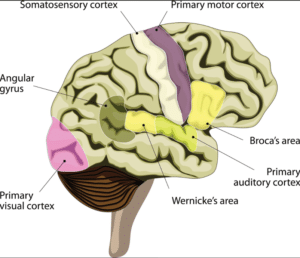
Broca’s Area (బ్రోకాస్ ప్రాంతం): Located in the frontal lobe. It is responsible for speech production and muscular articulation of words. Damage here leads to Broca’s Aphasia (understanding speech but unable to smoothly produce words).
ఇది మెదడు ముందరి భాగంలో (Frontal lobe) ఉంటుంది. ఇది మాటల ఉత్పత్తికి (Speech production) ఉపయోగపడుతుంది. ఈ భాగం దెబ్బతింటే అవతలి వారు చెప్పేది అర్థమౌతుంది కానీ తిరిగి మాట్లాడలేరు.
Wernicke’s Area (వెర్నికీస్ ప్రాంతం): Located in the temporal lobe. It is responsible for speech comprehension and understanding meaning. Damage here leads to Wernicke’s Aphasia (producing fluent but completely meaningless strings of words).
తెలుగు: ఇది మెదడు ప్రక్క భాగంలో (Temporal lobe) ఉంటుంది. ఇది భాషను అర్థం చేసుకోవడానికి (Comprehension) తోడ్పడుతుంది. ఈ భాగం దెబ్బతింటే మాటలు స్పష్టంగా వస్తాయి కానీ వాటిలో ఎలాంటి అర్థం ఉండదు.
Key Theories of Language Development / ప్రధాన భాషా సిద్ధాంతాలు
Innatist Theory (Noam Chomsky): Chomsky asserted humans are born with an innate, biological Language Acquisition Device (LAD) and a Universal Grammar blueprint that allows children to automatically decode syntax.
నోమ్ చోమ్స్కీ ప్రకారం, మానవులకు పుట్టుకతోనే ఒక జీవసంబంధమైన పరికరం ఉంటుంది, దాన్నే భాషా గ్రహణ పరికరం (LAD) అంటారు. దీనివల్ల పిల్లలు భాషను సులువుగా గ్రహించగలరు.
Behaviorist Theory (B.F. Skinner): Skinner argued language is entirely learned through environmental conditioning, imitation, and parental reinforcement (rewards/praise).
బి.ఎఫ్. స్కిన్నర్ ప్రకారం, పిల్లలు అనుకరణ (Imitation) మరియు పెద్దల నుండి లభించే ప్రోత్సాహం (Reinforcement) ద్వారానే భాషను పూర్తిగా నేర్చుకుంటారు.
5. Understanding Emotional Development / ఉద్వేగ వికాసం అంటే ఏమిటి?
Emotional development refers to the progressive emergence of a person’s ability to recognize, express, understand, and manage their feelings from infancy through adulthood. It plays a critical role in forming a child’s personality, self-esteem, and social relationships.
ఉద్వేగ వికాసం అంటే ఒక వ్యక్తి చిన్నతనం నుండి పెద్దయ్యే వరకు తన భావాలను (కోపం, బాధ, సంతోషం వంటివి) గుర్తించడం, వ్యక్తపరచడం, అర్థం చేసుకోవడం మరియు నియంత్రించుకునే సామర్థ్యాల ప్రగతి. ఇది ఒక బిడ్డ యొక్క వ్యక్తిత్వం, ఆత్మవిశ్వాసం మరియు సామాజిక సంబంధాలను నిర్ధారించడంలో కీలక పాత్ర పోషిస్తుంది.
Erik Erikson’s Psychosocial Stages (Early Childhood) / ఎరిక్ ఎరిక్సన్ మనోసాంఘిక వికాస దశలు
The prominent psychologist Erik Erikson proposed that identity and emotional health develop through a series of psychosocial crises. The earliest foundational stages include:
ప్రముఖ మనోవిజ్ఞాన శాస్త్రవేత్త ఎరిక్ ఎరిక్సన్ ప్రకారం, మానసిక మరియు ఉద్వేగ వికాసం సమాజంతో జరిగే పరస్పర చర్యల ఆధారంగా ఎనిమిది దశల్లో సాగుతుంది. మొదటి మూడు దశలు ఉద్వేగ వికాసానికి పునాది వేస్తాయి:
| Stage & Crisis / దశ | Age Range / వయస్సు | Emotional Outcome / ఉద్వేగ ఫలితం |
1. Trust vs. Mistrust
(నమ్మకం వసెస్ అవిశ్వాసం) | 0 – 1 Year | Hope. If caregivers are reliable and affectionate, the infant develops a sense of basic trust and security.
నమ్మకం/ఆశ. సంరక్షకులు ప్రేమగా చూసుకుంటే పిల్లల్లో లోకంపై నమ్మకం, భద్రతా భావం ఏర్పడతాయి. |
2. Autonomy vs. Shame & Doubt
(స్వయంప్రతిపత్తి వసెస్ సిగ్గు, సందేహం) | 1 – 3 Years | Willpower. The child learns to exercise control over physical skills (like potty training) and choices. Over-criticism leads to self-doubt.
స్వయంప్రతిపత్తి. పనులను స్వయంగా చేసుకోవడానికి ప్రయత్నిస్తారు. ఈ దశలో ఎక్కువగా మందలిస్తే సిగ్గు, సందేహం పెరుగుతాయి. |
3. Initiative vs. Guilt
(చొరవ వసెస్ తప్పుచేశాననే భావన) | 3 – 6 Years | Purpose. Children begin asserting power and control over their world through directing play. If stifled, they feel guilt.
చొరవ. ఆటల్లో, పనుల్లో చొరవ చూపుతారు. ఈ చొరవను అణచివేస్తే వారిలో తప్పుచేశాననే భావన (Guilt) కలుగుతుంది. |
Emotional Regulation & The Brain / ఉద్వేగాలు మరియు మెదడు నిర్మాణం
The neurological control of human emotions relies heavily on two interconnected regions in the brain:
మానవ ఉద్వేగాలను నియంత్రించడంలో మెదడులోని రెండు ప్రధాన భాగాలు అత్యంత ముఖ్యమైన పాత్ర పోషిస్తాయి:
The Amygdala (అమిగ్డాలా): Part of the limbic system, this small almond-shaped structure acts as the brain’s “alarm system.” It processes raw emotions like fear, anxiety, and anger instantly.
తెలుగు: ఇది మెదడులోని లింబిక్ వ్యవస్థలో ఉండే ఒక చిన్న బాదం పప్పు ఆకారపు నిర్మాణం. ఇది భయం, ఆందోళన మరియు కోపం వంటి ప్రాథమిక ఉద్వేగాలను త్వరగా ప్రాసెస్ చేస్తుంది.
The Prefrontal Cortex (ప్రీఫ్రంటల్ కార్టెక్స్): Located at the front of the brain, this area handles logic, self-control, and emotional regulation (calming the amygdala down). It is not fully matured until young adulthood.
ఇది మెదడు ముందరి భాగంలో ఉంటుంది. ఇది తార్కిక ఆలోచన, స్వీయ నియంత్రణ మరియు ఉద్వేగాల నియంత్రణను చూస్తుంది. ఇది పూర్తిగా ఎదగడానికి 20 ఏళ్లకు పైగా సమయం పడుతుంది.
6. Understanding Social Development / సామాజిక వికాసం అంటే ఏమిటి?
Social development refers to the process through which a child learns to interact with others, build relationships, and navigate the social structures, norms, and values of their culture. It transforms an individual from a purely biological organism into an integrated, functioning member of society.
సామాజిక వికాసం అంటే ఒక బిడ్డ ఇతరులతో పరస్పర చర్యలు జరపడం, సంబంధాలను పెంపొందించుకోవడం మరియు సమాజంలోని విలువలు, నియమాలు మరియు సంస్కృతిని అర్థం చేసుకుని ప్రవర్తించడాన్ని నేర్చుకునే ప్రక్రియ. ఇది ఒక వ్యక్తిని కేవలం ఒక జీవి నుండి సమాజంలో బాధ్యతాయుతమైన సభ్యునిగా మారుస్తుంది.
Lev Vygotsky’s Socio-Cultural Theory / లెవ్ వైగోట్స్కీ సామాజిక-సాంస్కృతిక సిద్ధాంతం
The Soviet psychologist Lev Vygotsky revolutionized psychology by stating that cognitive and social growth cannot be separated. Learning happens first in a social context before it is internalized individually.
ప్రముఖ మనోవిజ్ఞాన శాస్త్రవేత్త లెవ్ వైగోట్స్కీ ప్రకారం, పిల్లల జ్ఞానాత్మక వికాసం మరియు సామాజిక వికాసం ఒకదానితో ఒకటి ముడిపడి ఉంటాయి. ఏ అభ్యసనమైనా మొదట సమాజంలో (ఇతరులతో కలవడం ద్వారా) జరిగి, ఆ తర్వాతే వ్యక్తిగతంగా స్థిరపడుతుంది. ఆయన సిద్ధాంతంలో 3 ముఖ్యమైన భావనలు ఉన్నాయి:
Zone of Proximal Development – ZPD (సమీప వికాస మండలం): The distance between what a learner can do independently and what they can achieve with guidance.
ఒక పిల్వాడు స్వయంగా చేయగలిగే పనికి మరియు ఇతరుల సహాయంతో చేయగలిగే పనికి మధ్య గల వ్యత్యాసమే ZPD.
Scaffolding (సహాయం అందించడం / మద్దతు): The temporary support given by a teacher, parent, or peer to help the child master a task. As the child gains competence, this support is slowly removed.
పిల్లవాడు ఒక పనిని నేర్చుకునేటప్పుడు ఉపాధ్యాయుడు లేదా పెద్దలు అందించే తాత్కాలిక సహాయాన్ని ‘స్కాఫోల్డింగ్’ అంటారు. పని పూర్తిగా నేర్చుకున్నాక ఈ సహాయాన్ని ఆపేస్తారు.
More Knowledgeable Other – MKO (అధిక జ్ఞానం గల ఇతరులు): Anyone who has a better understanding or a higher ability level than the learner regarding a specific task (can be a teacher, peer, or even a digital tool).
తెలుగు: నేర్చుకునే వ్యక్తి కంటే ఆయా విషయాల్లో ఎక్కువ జ్ఞానం లేదా నైపుణ్యం ఉన్న వ్యక్తులు (ఉపాధ్యాయులు, స్నేహితులు లేదా తల్లిదండ్రులు).
Parten’s Stages of Play / ప్లే (ఆటల) వికాస దశలు
Sociologist Mildred Parten identified how children’s social interaction evolves systematically through their style of play:
సామాజిక శాస్త్రవేత్త మిల్డ్రెడ్ పార్టెన్ పిల్లలు ఆడే ఆటల ఆధారంగా వారి సామాజిక వికాసం ఎలా పరిణామం చెందుతుందో క్రింది దశలుగా వివరించారు:
Solitary Play (ఏకాంత క్రీడ): Infancy. The child plays completely alone with their own toys, showing no interest in adjacent children.
శిశువు దశ. పక్కన పిల్లలు ఉన్నా పట్టించుకోకుండా, తన బొమ్మలతో తాను ఒంటరిగా ఆడుకోవడం.
Parallel Play (సమాంతర క్రీడ): Toddlerhood (2-3 Years). Children play side-by-side with similar toys, but they do not interact or share tools directly.
2-3 సంవత్సరాలు. పక్కపక్కనే కూర్చుని ఒకేలాంటి బొమ్మలతో ఆడుకుంటారు, కానీ ఒకరికొకరు వస్తువులు పంచుకోరు, మాట్లాడుకోరు.
Associative Play (సహచర క్రీడ): Preschool (3-4 Years). Children interact and share toys, but there is no common goal, organization, or hard rule.
3-4 సంవత్సరాలు. ఒకరితో ఒకరు మాట్లాడుకుంటూ, బొమ్మలు పంచుకుంటూ ఆడుకుంటారు, కానీ ఆ ఆటకు ఒక ఉమ్మడి లక్ష్యం లేదా నిర్దిష్ట నియమాలు ఉండవు.
Cooperative Play (సహకార క్రీడ): School Age (4+ Years). Highly organized play with a shared structural objective, distinct roles, or team rules (e.g., playing cricket or a structured board game).
4 సంవత్సరాల పైబడి. ఒకే లక్ష్యంతో, రూల్స్ పెట్టుకుని జట్టుగా ఆడుకునే ఆటలు (ఉదాహరణకు: క్రికెట్, దాగుడు మూతలు).
7. Understanding Moral Development / నైతిక వికాసం అంటే ఏమిటి?
Moral development focuses on how individuals evolve their sense of right and wrong, justice, ethics, and human rights as they mature. It explains how a person transitions from obeying rules simply to avoid punishment to developing an internal ethical compass.
నైతిక వికాసం అంటే ఒక వ్యక్తి ఎదుగుతున్న కొద్దీ ఏది తప్పు, ఏది రైట్, న్యాయం, మరియు నైతిక విలువలను ఎలా అర్థం చేసుకుంటాడో వివరించే ప్రక్రియ. కేవలం శిక్ష నుండి తప్పించుకోవడానికి రూల్స్ పాటించే స్థాయి నుండి, సొంతంగా ఒక అంతర్గత నైతిక విలువను పెంపొందించుకునే స్థాయికి ఒక వ్యక్తి ఎలా మారుతాడో ఇది వివరిస్తుంది.
Lawrence Kohlberg’s 3 Levels & 6 Stages of Moral Development / లారెన్స్ కోల్బర్గ్ నైతిక వికాస దశలు
American psychologist Lawrence Kohlberg modified and expanded Jean Piaget’s work to form a comprehensive theory. By presenting individuals with moral dilemmas (most famously the Heinz Dilemma, where a husband must decide whether to steal an unaffordable drug to save his dying wife), Kohlberg identified three distinct levels, each containing two stages:
అమెరికాకు చెందిన ప్రముఖ మనోవిజ్ఞాన శాస్త్రవేత్త లారెన్స్ కోల్బర్గ్ పిల్లలకు కొన్ని నైతిక సందేహాలను (ముఖ్యంగా హైంజ్ డైలమా – ఒక భర్త తన చనిపోతున్న భార్యను కాపాడటానికి డబ్బులు లేక మందులను దొంగిలించాలా వద్దా అనే కథ) వివరించి, వారి సమాధానాల ఆధారంగా నైతిక వికాసాన్ని 3 స్థాయిలు మరియు 6 దశలుగా వర్గీకరించారు:
Level 1: Pre-Conventional Morality (పూర్వ సాంప్రదాయక స్థాయి)
Age Range: Early Childhood (4 – 10 Years)
Core Theme: Morality is externally controlled. Rules are strictly obeyed to gain personal rewards or avoid physical pain. / నైతికత పూర్తిగా బాహ్య శక్తులపై ఆధారపడి ఉంటుంది. శిక్ష తప్పించుకోవడానికి లేదా స్వార్థం కోసం నియమాలు పాటిస్తారు.
Stage 1: Punishment & Obedience Orientation (శిక్ష-విధేయత దశ): Rules are followed solely to avoid punishment. If Heinz steals, he goes to jail, so it’s wrong. / శిక్ష పడుతుందనే భయంతోనే తప్పు చేయకుండా మాట వింటారు.
Stage 2: Instrumental Relativist / Individualism & Exchange (సహజ సాధనోపయోగ దశ): Guided by self-interest. “What’s in it for me?” Equal exchange or mutual benefits matter. / నాకేం లాభం అనే స్వార్థ ఆలోచన ఉంటుంది (ఉదా: “నువ్వు నా పెన్సిల్ ఇస్తే, నేను నీకు చాక్లెట్ ఇస్తా”).
Level 2: Conventional Morality (సాంప్రదాయక స్థాయి)
Age Range: Late Childhood to Adolescence (10 – 13 Years)
Core Theme: Individuals conform to social expectations and rules to maintain relationships, gain social approval, or keep social order. / సమాజం మెచ్చుకోవాలన్నా, లేదా సమాజంలో శాంతిభద్రతలు కాపాడాలన్నా రూల్స్ పాటించాల్సిందేనని నమ్ముతారు.
Stage 3: Good Boy / Nice Girl Orientation (మంచి బాలుడు/మంచి బాలిక దశ): Actions are driven by the desire for social approval and fitting into social groups. / ఇతరుల దృష్టిలో మంచి వ్యక్తిగా అనిపించుకోవడానికి ప్రయత్నిస్తారు.
Stage 4: Law & Order Orientation (అధికార-సామాజిక క్రమ నిర్వహణ దశ): Blindly obeying laws, respect for authority, and performing social duties to maintain system stability. “Stealing is against the law, period.” / చట్టాన్ని, సమాజ నియమాలను ఖచ్చితంగా గౌరవించాలి, లేదంటే సమాజం పాడైపోతుందని భావిస్తారు.
Level 3: Post-Conventional Morality (ఉత్తర సాంప్రదాయక స్థాయి)
Age Range: Adulthood (13+ Years) – Achieved by only a minority)
Core Theme: Morality is defined by abstract, personal ethical principles that may sometimes conflict with written laws. / చట్టాల కంటే మానవత్వం, ప్రాథమిక హక్కులు మరియు అంతరాత్మ సాక్షిగా ఆలోచించి నిర్ణయాలు తీసుకుంటారు.
Stage 5: Social Contract & Individual Rights (సామాజిక ఒప్పంద దశ): Laws are seen as flexible tools for human welfare. If a law hurts human life, it can be changed. / చట్టాలు మనుషుల మేలు కోసమే ఏర్పడ్డాయి, అవసరమైతే వాటిని మార్చవచ్చు అని నమ్ముతారు.
Stage 6: Universal Ethical Principles (సార్వత్రిక నైతిక సూత్రాల దశ): Morality is guided by internalized, absolute principles of justice, human rights, and equality—regardless of legal consequences. (e.g., Mahatma Gandhi, Nelson Mandela). / చట్టంతో సంబంధం లేకుండా, అంతరాత్మ సాక్షిగా విశ్వజనీనమైన న్యాయం మరియు మానవత్వాన్ని మాత్రమే పాటిస్తారు.
Critical Backlash: Carol Gilligan’s Ethics of Care / కారోల్ గిల్లిగన్ విమర్శ
Kohlberg’s theory faced major criticism from his student Carol Gilligan. She pointed out that Kohlberg tested only males, making his theory gender-biased. While males often focus on an Ethics of Justice (rules and rights), females frequently prioritize an Ethics of Care (relationships, empathy, and helping others).
లారెన్స్ కోల్బర్గ్ సిద్ధాంతాన్ని ఆయన శిష్యురాలైన కారోల్ గిల్లిగన్ తీవ్రంగా విమర్శించారు. కోల్బర్గ్ కేవలం మగపిల్లలపైనే పరిశోధనలు చేసి ఈ సిద్ధాంతాన్ని రూపొందించారని, ఇందులో లింగ వివక్ష (Gender Bias) ఉందని ఆమె వాదించారు. పురుషులు సాధారణంగా ‘న్యాయం’ (Justice) వైపు ఆలోచిస్తే, స్త్రీలు ‘బాధ్యత, ప్రేమ, మరియు సంబంధాల రక్షణ’ (Ethics of Care) వైపు మొగ్గు చూపుతారని ఆమె నిరూపించారు.
8. Understanding Personality Development / మూర్తిమత్వ వికాసం అంటే ఏమిటి?
Personality development refers to the dynamic and organized blueprint of behavioral, emotional, and cognitive characteristics that make an individual completely unique. It is shaped by the complex interplay of nature (genetic heredity) and nurture (socio-environmental factors).
మూర్తిమత్వ (వ్యక్తిత్వ) వికాసం అంటే ఒక వ్యక్తి యొక్క ప్రవర్తన, ఆలోచనా విధానం, మరియు ఉద్వేగాల కలయికతో కూడిన ఒక ప్రత్యేకమైన నమూనా. ఇది మనకు పుట్టుకతో వచ్చే వంశపారంపర్య లక్షణాలు (Nature) మరియు మనం పెరిగే సామాజిక వాతావరణం (Nurture) అనే రెండు ప్రధాన అంశాల పరస్పర చర్య వల్ల రూపుదిద్దుకుంటుంది.
Sigmund Freud’s Psychoanalytic Theory / సిగ్మండ్ ఫ్రాయిడ్ మనోవిశ్లేషణ సిద్ధాంతం
The Austrian neurologist Sigmund Freud revolutionized psychology by proposing that personality is driven by deep, unconscious forces and is structured into three conflicting components:
ఆస్ట్రియాకు చెందిన ప్రసిద్ధ శాస్త్రవేత్త సిగ్మండ్ ఫ్రాయిడ్ మానవ మనస్సును, వ్యక్తిత్వాన్ని విశ్లేషిస్తూ, మూర్తిమత్వంలో మూడు ప్రధాన నిర్మాణాత్మక భాగాలు ఉంటాయని ప్రతిపాదించారు:
The Id (ఇద్ / అహేతుక మనస్సు): Operating completely on the Pleasure Principle. It seeks immediate gratification of primitive biological drives (hunger, aggression) without thinking about rules or consequences. “I want it right now!”
తెలుగు: ఇది పూర్తిగా సుఖ సూత్రం (Pleasure Principle) పై పనిచేస్తుంది. నీతి, నియమాలతో సంబంధం లేకుండా తన కోరికలు వెంటనే తీరాలని కోరుకుంటుంది. పసిపిల్లలలో ఇది ఎక్కువగా కనిపిస్తుంది.
The Ego (అహం / హేతుక మనస్సు): Operating on the Reality Principle. It acts as a realistic mediator balancing the wild demands of the Id and the moral constraints of the Superego. It uses logical thinking to satisfy needs safely.
తెలుగు: ఇది వాస్తవిక సూత్రం (Reality Principle) పై ఆధారపడి పనిచేస్తుంది. ఇద్ యొక్క అహేతుక కోరికలను, సూపర్ఈగో యొక్క నైతిక నియమాలను సమన్వయపరుస్తూ వాస్తవ పరిస్థితులకు అనుగుణంగా నిర్ణయాలు తీసుకుంటుంది.
The Superego (సూపర్ ఈగో / ఆదర్శ మనస్సు): Operating on the Morality Principle. Representing internalized parental and societal ideals, morals, and the conscience. It strives for perfection and punishes bad behavior with guilt.
ఇది నైతిక లేదా ఆదర్శ సూత్రం (Morality Principle) పై పనిచేస్తుంది. సమాజంలోని నియమాలు, సంస్కృతి, తప్పు-ఒప్పుల విచక్షణను ఇది కలిగి ఉంటుంది. ఇది వ్యక్తిని ఆదర్శవంతంగా బ్రతకమని శాసిస్తుంది.
The Modern Trait Theory: The Big Five Model (OCEAN) / ఆధునిక మూర్తిమత్వ గుణాంశాల సిద్ధాంతం
Today, contemporary psychologists rely heavily on the Five-Factor Model to measure and quantify adult personality traits:
నేటి ఆధునిక మనోవిజ్ఞాన శాస్త్రంలో ఒక వ్యక్తి యొక్క గుణాంశాలను అంచనా వేయడానికి “బిగ్ ఫైవ్ మోడల్” (OCEAN) ను విస్తృతంగా ఉపయోగిస్తున్నారు:
| Trait / గుణాంశం | High Scorers Profile / ఎక్కువ శాతం ఉన్నవారి లక్షణాలు | Low Scorers Profile / తక్కువ శాతం ఉన్నవారి లక్షణాలు |
O – Openness
(కొత్త విషయాల పట్ల సుముఖత) | Creative, curious, imaginative, open to changes.
సృజనాత్మకత, కొత్త విషయాలను అన్వేషించడం. | Conventional, prefers familiar routines.
పాత పద్ధతులనే ఇష్టపడటం, మార్పును వ్యతిరేకించడం. |
C – Conscientiousness
(సమగ్రత / క్రమశిక్షణ) | Organized, disciplined, reliable, goal-driven.
సమయపాలన, క్రమశిక్షణ, బాధ్యతాయుతంగా ఉండటం. | Careless, easily distracted, disorganized.
అలసత్వం, ప్రణాళిక లేకపోవడం. |
E – Extraversion
(బహిర్ముఖత్వం) | Outgoing, energetic, talkative, highly social.
నలుగురితో త్వరగా కలవడం, చురుకుగా మాట్లాడటం. | Reserved, quiet, prefers solitary environments.
అంతర్ముఖత్వం, ఒంటరిగా ఉండటానికి ఇష్టపడటం. |
A – Agreeableness
(సహకార గుణం / అనుకూలత) | Trusting, empathetic, helpful, cooperative.
సానుభూతి, ఇతరులకు సహాయం చేయడం, కరుణ. | Competitive, critical, suspicious, manipulative.
అనుమానించడం, ఎప్పుడూ పోటీ పడటం. |
N – Neuroticism
(ఆందోళన / భావోద్వేగ అస్థిరత) | Anxious, moody, easily stressed, vulnerable.
త్వరగా ఆందోళన చెందడం, మానసిక ఒత్తిడి. | Emotionally resilient, calm, stable under pressure.
ప్రశాంతంగా ఉండటం, భావోద్వేగ స్థిరత్వం. |
9. Understanding Spiritual Development / ఆధ్యాత్మిక వికాసం అంటే ఏమిటి?
Spiritual development involves a progressive refinement of an individual’s inner consciousness. Unlike religious development, which focuses on specific institutional dogmas, rituals, and sectarian codes, spiritual development centers on an existential quest for ultimate meaning, transcendent purpose, and a deep psychological connection to the broader universe.
ఆధ్యాత్మిక వికాసం అంటే ఒక వ్యక్తి యొక్క అంతర్గత చేతన లేదా ఆత్మ సాక్షాత్కారం క్రమంగా పరిణామం చెందడం. మతాచారాలు కేవలం బాహ్య నియమాలు, పూజా విధానాలకు పరిమితమైతే, ఆధ్యాత్మికత అనేది జీవితం యొక్క పరమార్ధం, అంతర్గత ప్రశాంతత మరియు సృష్టితో ఉండే ఒక లోతైన మానసిక బంధాన్ని అన్వేషిస్తుంది.
James Fowler’s Stages of Faith Development / జేమ్స్ ఫౌలర్ విశ్వాస వికాస దశలు
American developmental psychologist James Fowler mapped out how human beings construct meaning and spiritual faith across the lifespan. The core foundational stages frequently highlighted include:
అమెరికాకు చెందిన మనోవిజ్ఞాన శాస్త్రవేత్త జేమ్స్ ఫౌలర్ మానవులు తమ జీవిత కాలంలో నమ్మకాలను, ఆధ్యాత్మిక భావాలను ఎలా పెంపొందించుకుంటారో వివరించడానికి ఒక నమూనాను రూపొందించారు:
Stage 1: Intuitive-Projective Faith (సహజాత-ప్రక్షేపక విశ్వాసం): Early Childhood (3-7 Years). Faith is entirely fantasy-driven, shaped by powerful imaginative stories, parental examples, and visible cultural symbols of good versus evil.
తెలుగు: 3-7 సంవత్సరాలు. ఈ దశలో పిల్లల ఆధ్యాత్మిక ఆలోచనలు కేవలం ఊహాజనిత కథలు, దేవుడు-రాక్షసుడు వంటి పాత్రల చిత్రణ మరియు పెద్దల ప్రవర్తన ఆధారంగా ఊహించుకునే విధంగా ఉంటాయి.
Stage 2: Mythic-Literal Faith (పురాణ-అక్షరార్థ విశ్వాసం): School Age (7-12Years). Spiritual concepts are interpreted with rigid, literal logic. God is viewed as a cosmic judge who rewards good behavior and punishes bad behavior based on cosmic fairness.
తెలుగు: 7-12 సంవత్సరాలు. వీరు కథలను, మతపరమైన విషయాలను ఉన్నదున్నట్లుగా (Literal గా) నమ్ముతారు. మంచి చేస్తే దేవుడు పుణ్యం ఇస్తాడు, తప్పు చేస్తే వెంటనే శిక్షిస్తాడు అనే ఒక న్యాయ సూత్రాన్ని గట్టిగా నమ్ముతారు.
Stage 3: Synthetic-Conventional Faith (సంశ్లేషణ-సాంప్రదాయక విశ్వాసం): Adolescence to Young Adulthood. Faith is deeply linked to social belonging and group identity. The individual conforms to the shared beliefs of their peer group, family, or institutional religious authority without critical independent questioning.
తెలుగు: కౌమార దశ. తమ కుటుంబం, స్నేహితులు లేదా సమాజం దేనినైతే నమ్ముతుందో, ఆ సంప్రదాయాలను వీరు గ్రుడ్డిగా పాటిస్తూ తమ గ్రూప్ ఐడెంటిటీని కాపాడుకుంటారు. సొంతంగా పెద్దగా ప్రశ్నించరు.
Stage 4: Individuative-Reflective Faith (వ్యక్తిగత-ప్రతిబింబిత విశ్వాసం): Adulthood. A critical tipping point. The individual steps away from group conformity, takes personal responsibility for their beliefs, and critically analyzes structural dogmas to form an independent spiritual identity.
తెలుగు: వయోజన దశ. ఇక్కడ ఒక పెద్ద మార్పు వస్తుంది. సమాజం చెప్పిన నమ్మకాలను పక్కన పెట్టి, “నేను దేనిని నమ్ముతున్నాను? ఎందుకు నమ్ముతున్నాను?” అని తార్కికంగా ప్రశ్నించుకుని, తమదైన సొంత ఆధ్యాత్మిక మార్గాన్ని ఎంచుకుంటారు.
Psychosocial Milestones: The Transcendence Transition / ఆధ్యాత్మిక వికాసంలో మార్పులు
In older adulthood, spiritual development often aligns with what psychologist Lars Tornstam defined as Gerotranscendence—a natural shift from a materialistic, ego-driven worldview to a more cosmic, peaceful perspective, reducing the fear of death and increasing altruistic empathy.
వృద్ధాప్యంలో, ఆధ్యాత్మిక వికాసం అనేది భౌతిక సుఖాలు, అహం (Ego) ను వదిలేసి విశ్వజనీనమైన ప్రశాంతత వైపు మళ్ళుతుంది. దీనివల్ల చావు పట్ల భయం తగ్గి, తోటి జీవులపై అపారమైన కరుణ ఏర్పడుతుంది.
10. Understanding Creative Development / సృజనాత్మక వికాసం అంటే ఏమిటి?
Creative development is the evolution of an individual’s ability to generate novel, original, and valuable ideas, solutions, or expressions. Rather than being a fixed trait that someone is simply born with, creativity is a dynamic cognitive process that can be nurtured, structured, and expanded over time.
సృజనాత్మక వికాసం అంటే ఒక వ్యక్తి సరికొత్త, అసలైన (Original) మరియు విలువైన ఆలోచనలను లేదా పరిష్కారాలను పెంపొందించుకునే ప్రక్రియ. సృజనాత్మకత (Creativity) అనేది కేవలం పుట్టుకతోనే వచ్చే స్థిరమైన లక్షణం కాదు; ఇది నిరంతరం సాధన ద్వారా పెంపొందించుకోగల ఒక మానసిక నైపుణ్యం.
Joy Paul Guilford’s Structure of Intellect / జె. పి. గిల్ఫోర్డ్ మేధోస్వరూప సిద్ధాంతం
American psychologist J. P. Guilford made a historic contribution to the study of creativity by distinguishing between two fundamentally different types of human thinking:
అమెరికాకు చెందిన ప్రముఖ మనోవిజ్ఞాన శాస్త్రవేత్త జె. పి. గిల్ఫోర్డ్ మానవుని ఆలోచనా సరళిని రెండు ముఖ్యమైన విభాగాలుగా వర్గీకరించి సృజనాత్మకతపై పరిశోధనలు చేశారు:
Divergent Thinking (వైవిధ్య లేదా బహుముఖ ఆలోచన): This is the true engine of creativity. It involves starting from a single point and generating multiple, diverse, and unique possibilities or solutions. It breaks away from traditional boundaries.
తెలుగు: ఇది సృజనాత్మకతకు ప్రాణం. ఒక సమస్యకు ఒకే ఒక సమాధానం కాకుండా, విభిన్న కోణాల్లో ఆలోచించి అనేక సరికొత్త పరిష్కారాలను కనుగొనడాన్ని వైవిధ్య ఆలోచన అంటారు.
Convergent Thinking (సమరుప లేదా ఏకముఖ ఆలోచన): This involves bringing together various pieces of information to find the single, correct, standard solution to a problem (e.g., standard multiple-choice questions or a math formula).
తెలుగు: సమాజంలో ముందే నిర్ణయించబడిన ఒకే ఒక్క సరైన సమాధానాన్ని లేదా చట్టాన్ని కనుగొనడానికి చేసే ఆలోచన (ఉదాహరణకు: మ్యాథ్స్ ప్రాబ్లమ్స్ చేయడం లేదా మల్టిపుల్ ఛాయిస్ ప్రశ్నలు రాయడం).
The 4 Core Elements of Creativity (సృజనాత్మకతకు గల 4 ముఖ్య లక్షణాలు):
Guilford and later E. Paul Torrance identified four metrics to measure divergent thinking:
Fluency (ధారాళత): The ability to produce a large number of ideas rapidly. / తక్కువ సమయంలో ఎక్కువ ఆలోచనలను వేగంగా వ్యక్తపరచడం.
Flexibility (సరళత/నమ్యత): The ability to shift gears and produce completely different categories of ideas. / ఒకే రకమైన ఆలోచనలు కాకుండా విభిన్న రంగాలకు చెందిన మార్గాలను ఆలోచించడం.
Originality (నవ్యత): Generating unique, rare, or completely off-beat ideas that nobody else thought of. / ఎవరూ ఊహించని సరికొత్త, అరుదైన నూతన ఆలోచనలను చేయడం.
Elaboration (వివరణాత్మకత): The capability to add fine details, develop, and flesh out an idea to make it complete. / ఒక చిన్న ఆలోచనను విస్తరించి, దానికి పూర్తి వివరాలు జోడించి అందంగా తీర్చిదిద్దడం.
Graham Wallas’s 4 Stages of the Creative Process / గ్రహం వాలాస్ సృజనాత్మక ప్రక్రియ దశలు
Psychologist Graham Wallas mapped out the distinct chronological journey an original idea takes before breaking through to reality:
మనస్తత్వవేత్త గ్రహం వాలాస్ ఒక అద్భుతమైన సృజనాత్మక ఆలోచన మన మెదడులో ఎలా పుడుతుందో వివరించడానికి 4 ముఖ్యమైన దశలను ప్రతిపాదించారు:
Preparation (సమాయత్తం / సన్నాహక దశ): Gathering information, researching the problem, and defining the challenge. / సమస్యను అర్థం చేసుకుని, దానికి సంబంధించిన సమాచారాన్ని సేకరించే ప్రాథమిక దశ.
Incubation (అంతర్గత ఆలోచన / సుప్తచేతనా దశ): The individual steps away from the problem and stops conscious thinking about it. The unconscious mind quietly works on connecting the dots behind the scenes. / సమస్య గురించి ఆలోచించడం తాత్కాలికంగా ఆపేసి పక్కన పెట్టడం. ఈ సమయంలో మన ఉపచేతన మనస్సు (Unconscious Mind) దానికి సంబంధించిన పరిష్కారాల కోసం లోపల పని చేస్తూనే ఉంటుంది.
Illumination (ప్రకాశం / స్ఫురణ దశ): The classic “Aha!” or “Eureka!” moment. The unexpected breakthrough breakthrough where the solution suddenly flashes into conscious awareness. / హఠాత్తుగా మెరుపులాగా ఒక అద్భుతమైన పరిష్కారం లేదా ఆలోచన మనస్సులో స్ఫురించే అద్భుత క్షణం.
Verification (నిరూపణ లేదా రుజువు దశ): Testing, evaluating, and structurally refining the idea to see if it actually works in reality. / వచ్చిన ఆలోచన నిజంగా పనిచేస్తుందా లేదా అని పరీక్షించి, దాన్ని సరిదిద్దుకునే ఆఖరి దశ.
11. Understanding Intellectual Development / జ్ఞానాత్మక లేదా మానసిక వికాసం అంటే ఏమిటి?
Intellectual (or cognitive) development refers to the growth of an individual’s mental capabilities, including thinking, problem-solving, memory, language acquisition, and decision-making. It details how a person perceives, processes, and organizes information from their environment to understand the world.
జ్ఞానాత్మక లేదా మానసిక వికాసం అంటే ఒక వ్యక్తి యొక్క ఆలోచనా విధానం, సమస్యల పరిష్కారం, జ్ఞాపకశక్తి, భాషా నైపుణ్యాలు మరియు నిర్ణయాలు తీసుకునే సామర్థ్యం పెరగడాన్ని సూచిస్తుంది. ఒక వ్యక్తి తన చుట్టూ ఉన్న వాతావరణం నుండి సమాచారాన్ని ఎలా గ్రహిస్తాడు, దాన్ని ఎలా విశ్లేషిస్తాడు మరియు ప్రపంచాన్ని ఎలా అర్థం చేసుకుంటాడో ఈ వికాసం వివరిస్తుంది.
Characteristics of Intellectual Development / మానసిక వికాసం యొక్క ముఖ్య లక్షణాలు
Intellectual growth does not happen overnight; it follows a definitive pattern marked by these key evolutionary characteristics:
మానసిక వికాసం అనేది హఠాత్తుగా జరిగేది కాదు. ఇది కొన్ని నిర్దిష్టమైన లక్షణాల ఆధారంగా నిరంతరం సాగుతుంది:
Concrete to Abstract Thinking (మూర్త భావనల నుండి అమూర్త భావనల వైపు): Children first think only about things they can physically see, touch, and feel (concrete objects). As they mature, they develop the capability to process complex, unseen concepts like freedom, algebra, or justice (abstract concepts).
తెలుగు: చిన్న పిల్లలు మొదట తమ కళ్ళ ముందు కనిపించే వస్తువులను (మూర్త విషయాలు) మాత్రమే అర్థం చేసుకోగలరు. వయసు పెరిగే కొద్దీ కంటికి కనిపించని ఆశయాలు, చట్టాలు, గణిత సూత్రాలు వంటి క్లిష్టమైన విషయాలను (అమూర్త విషయాలు) కూడా ఆలోచించగలుగుతారు.
Egocentric to Decentered Perspective (అహంకేంద్రిత ఆలోచన నుండి సామాజిక కోణం వైపు): Young children inherently believe everyone sees, hears, and feels the exact same way they do (egocentrism). Over time, they learn to step into another person’s shoes and understand diverse viewpoints (decentering).
తెలుగు: చిన్న పిల్లలు ప్రపంచాన్ని తమ కోణం నుండే చూస్తారు; తమకు నచ్చినది అందరికీ నచ్చుతుంది అనుకుంటారు (అహంకేంద్రిత వాదం). ఎదుగుతున్న కొద్దీ ఇతరుల ఆలోచనలు, భావాలు వేరుగా ఉంటాయని అర్థం చేసుకోగలరు.
Expansion of Attention Span & Memory (ఏకాగ్రత మరియు జ్ఞాపకశక్తి విస్తరణ): The cognitive capacity to focus on a single task increases from just a few minutes in toddlers to hours of deep analytical processing in adulthood, alongside the transition from short-term sensory memory to structured long-term schematic memory storing.
తెలుగు: ఒక విషయంపై నిలిపే ఏకాగ్రత సమయం (Attention Span) కొద్ది నిమిషాల నుండి గంటల వరకు పెరుగుతుంది. అలాగే తాత్కాలిక జ్ఞాపకశక్తి స్థానంలో శాశ్వత స్మృతి (Long-term memory) పటిష్టమవుతుంది.
Language & Symbolism Mastery (భాషా నైపుణ్యం మరియు సంకేతాల వాడకం): The evolution from making simple sounds to utilizing complex grammatical syntax and symbolic mental representations to express internal thoughts accurately.
తెలుగు: సైగలు, చిన్న శబ్దాల స్థాయి నుండి భాషపై పూర్తి పట్టు సాధించడం మరియు సంకేతాలను, గుర్తులను ఉపయోగించి ఆలోచనలను వ్యక్తపరచడం అలవడుతుంది.
Jean Piaget’s 4 Stages of Cognitive Development / జీన్ పియాజె జ్ఞానాత్మక వికాస దశలు
The Swiss psychologist Jean Piaget argued that children are not passive learners, but rather “little scientists” who actively construct their understanding of the world through four chronological stages:
స్విట్జర్లాండ్కు చెందిన ప్రముఖ మనోవిజ్ఞాన శాస్త్రవేత్త జీన్ పియాజె పిల్లలను “చిన్న శాస్త్రవేత్తలు” (Little Scientists) గా అభివర్ణించారు. వారు తమ వాతావరణాన్ని అన్వేషిస్తూ స్వయంగా జ్ఞానాన్ని నిర్మించుకుంటారని చెప్తూ, 4 వికాస దశలను ప్రతిపాదించారు:
Sensory-Motor Stage (ఇంద్రియ ప్రచాలక దశ): Birth to 2 Years. The infant learns about the world strictly through senses (looking, hearing) and motor actions (grasping, crawling).
Key Milestone: Object Permanence (వస్తు స్థిరత్వ భావన) — Understanding that objects continue to exist even when hidden from view.
తెలుగు: 0-2 సంవత్సరాలు. శిశువు తన జ్ఞానేంద్రియాలు (చూడటం, వినడం) మరియు శారీరక కదలికల ద్వారా ప్రపంచాన్ని తెలుసుకుంటాడు. ఈ దశ చివర్లో కంటికి కనిపించకపోయినా వస్తువులు ఉనికిలోనే ఉంటాయని గ్రహిస్తాడు (వస్తు స్థిరత్వ భావన).
Pre-Operational Stage (పూర్వ ప్రచాలక దశ): 2 to 7 Years. Symbolic thinking and language flourish, but logical thinking is absent.
Key Traps: Animism (believing toys/clouds are alive) and Egocentrism (unable to see another’s perspective).
తెలుగు: 2-7 సంవత్సరాలు. భాష, బొమ్మలను గుర్తించే సామర్థ్యం పెరుగుతుంది. కానీ తార్కిక ఆలోచన ఉండదు. జీవవాదం (బొమ్మలకు ప్రాణం ఉందని నమ్మడం) మరియు అహంకేంద్రిత వాదం ఈ దశ ముఖ్య లక్షణాలు.
Concrete Operational Stage (మూర్త ప్రచాలక దశ): 7 to11 Years. Logical reasoning begins, but it is strictly locked to concrete physical objects right in front of them.
Key Milestone: Conservation (భద్రతా భావన) — Realizing that the quantity or volume of liquid stays the exact same even if poured into a different shaped tall or wide glass.
తెలుగు: 7-11 సంవత్సరాలు. కళ్ళ ముందు ఉన్న వస్తువులను చూస్తూ తార్కికంగా ఆలోచించగలరు. ఒక పొడవాటి గ్లాసులోని నీటిని వెడల్పాటి గ్లాసులోకి పోసినా నీటి పరిమాణం మారదని గ్రహిస్తారు (భద్రతా భావన).
Formal Operational Stage (అమూర్త ప్రచాలక దశ): 11 Years & Above. Abstract, hypothetical, and highly systematic scientific logic develops. “What if” questions can be evaluated systematically.
తెలుగు: 11 సంవత్సరాల పైబడి. కంటికి కనిపించని అమూర్త విషయాలను, ఊహాజనిత సమస్యలను క్రమబద్ధమైన శాస్త్రీయ పద్ధతిలో ఆలోచించి పరిష్కరించే అత్యున్నత మానసిక స్థాయి ఇది.
What is Intelligence Quotient (IQ)? / ప్రజ్ఞా లబ్ధి (IQ) అంటే ఏమిటి?
Intelligence Quotient (IQ) is a mathematical score derived from standardized tests designed to assess human intelligence and cognitive capabilities. The concept of IQ was originally refined by German psychologist William Stern, while Lewis Terman later formalized its classical mathematical formula.
ప్రజ్ఞా లబ్ధి (Intelligence Quotient – IQ) అనేది ఒక వ్యక్తి యొక్క మానసిక సామర్థ్యాన్ని, తెలివితేటలను అంచనా వేయడానికి ఉపయోగించే ఒక గణిత గణన. ఈ పదాన్ని మొదట జర్మన్ మనస్తత్వవేత్త విలియం స్టెర్న్ ప్రతిపాదించగా, దీనిని ఒక ఖచ్చితమైన సూత్రం రూపంలోకి తెచ్చిన ఘనత లూయిస్ టెర్మన్ కు దక్కుతుంది.
The standard scientific formula to compute traditional IQ is:
Mental Age (MA) / మానసిక వయస్సు: The level of cognitive performance a person shows relative to average statistical abilities for their age. / ఒక వ్యక్తి పరీక్షలో చూపే ప్రతిభ ఆధారంగా నిర్ణయించే మానసిక స్థాయి.
Chronological Age (CA) / శారీరక వయస్సు: The actual calendar age of the individual from birth. / పుట్టిన తేదీ ఆధారంగా లెక్కించే అసలు వయస్సు.
The Normal Distribution of IQ (The Bell Curve) / ప్రజ్ఞా లబ్ధి విస్తరణ (గంటాకృతి వక్రరేఖ)
When IQ scores of a large population are plotted on a graph, they naturally form a symmetrical Normal Distribution Curve (or Bell Curve).
సమాజంలోని ప్రజల అందరి ఐక్యూ (IQ) స్కోర్లను ఒక గ్రాఫ్పై గుర్తిస్తే, అది ఒక స్పష్టమైన సాధారణ విభాజన వక్రరేఖ (Normal Distribution Curve) లేదా గంటాకృతిని ఏర్పరుస్తుంది:
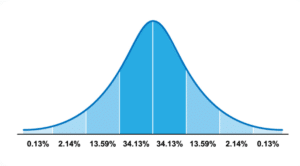
Look closely at how the population breaks down across standard parameters:
The Center (Score of 100): Represents the absolute population average. Roughly 68.26% of all people score between 85 and 115 (within one standard deviation from the mean).
తెలుగు: మధ్యలో ఉండే 100 స్కోరు సగటు తెలివితేటలను సూచిస్తుంది. ప్రపంచ జనాభాలో సుమారు 68.26% మంది ప్రజలు 85 నుండి 115 మధ్య స్కోరు కలిగి ఉంటారు.
The High Extremes (130+): Considered intellectually gifted. Less than 2.28% of the population falls into this category.
తెలుగు: 130 కంటే ఎక్కువ స్కోరు ఉంటే వారిని ‘అసాధారణ ప్రజ్ఞావంతులు’ (Gifted) అంటారు. జనాభాలో వీరు కేవలం 2.28% కంటే తక్కువ మంది ఉంటారు.
The Low Extremes (Below 70): Indicates significant intellectual developmental limitations.
తెలుగు: 70 కంటే తక్కువ స్కోరు ఉంటే వారిని ‘మానసిక మందకొడితనం’ లేదా ప్రజ్ఞా లోపం ఉన్నవారిగా గుర్తిస్తారు.
Terman’s IQ Classification Table / టెర్మన్ ప్రజ్ఞా లబ్ధి వర్గీకరణ పట్టిక
Psychologist Lewis Terman provided a high-yield classification index widely targeted in pedagogical competitive examinations:
మనోవిజ్ఞాన శాస్త్రవేత్త లూయిస్ టెర్మన్ ఐక్యూ స్కోర్ల ఆధారంగా మనుషులను ఈ క్రింది విధంగా వర్గీకరించారు:
| IQ Range / ప్రజ్ఞా లబ్ధి పరిధి | Classification Label / వర్గీకరణ |
| Above 140 | Genius / ప్రతిభావంతులు లేదా మేధావులు |
| 120 – 139 | Very Superior Intelligence / ఉన్నత ప్రజ్ఞావంతులు |
| 110 – 119 | Superior Intelligence / సగటు కంటే ఎక్కువ ప్రజ్ఞ |
| 90 – 109 | Average Intelligence / సగటు ప్రజ్ఞావంతులు (Most People) |
| 80 – 89 | Dull / మందబుద్ధి లేదా సగటు కంటే తక్కువ ప్రజ్ఞ |
| 70 – 79 | Borderline / సరిహద్దు రేఖ ప్రజ్ఞ |
| Below 70 | Intellectual Disability / ప్రజ్ఞా లోపం (మానసిక వైకల్యం) |